
 Master the Soil: On-Farm with Claire Whittle
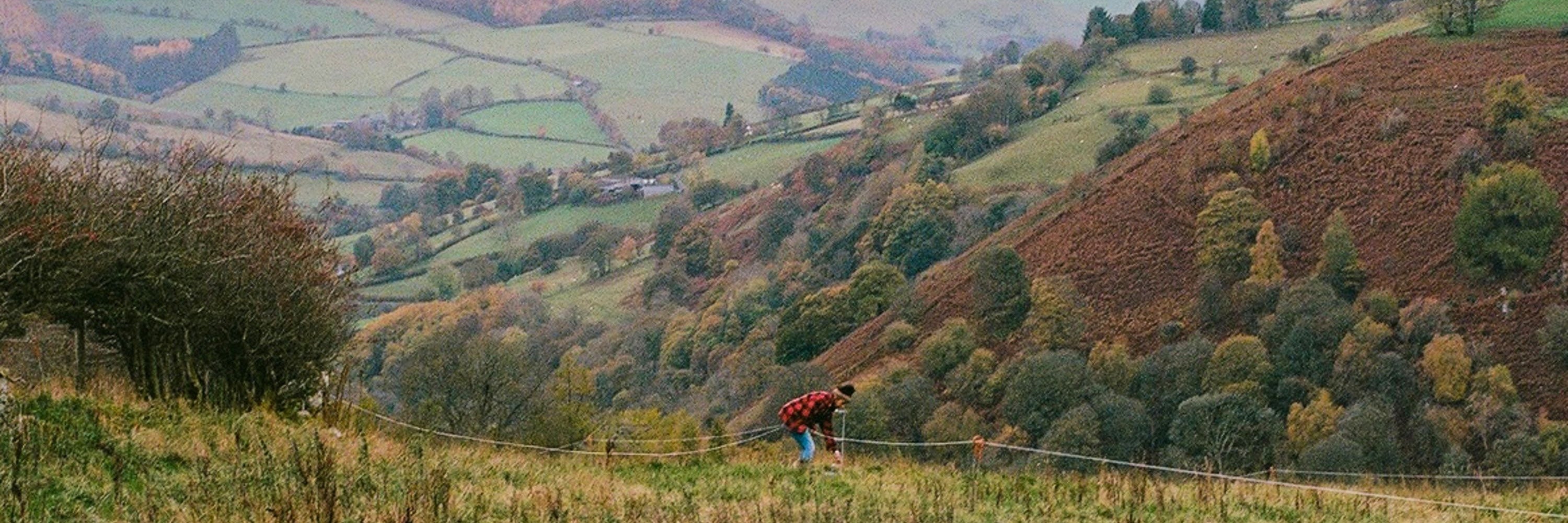
Claire Whittle is a new entrant farmer and experienced vet who works deep within rural North Wales. At a lofty 1400 feet above sea level, Claire manages Caedicws Farm, a 230-acre farm with a mixed herd of native breed cows. Le Chameau visited Claire on her farm in the steep terrain of Wales to ask her about life on the farm, her connection to nature and its local wildlife, and as a Le Chameau advocate, how wearing our boots serves her on the farm.
Claire, tell us a little about the farm and your farming practices
I’m a new entrant farmer at Caedicws Farm here in Wales, so I’m very much at the beginning stage of it all, learning as I go. The first thing I did with the farm was to leave much of it to grow for a year without any human or animal interference like grazing animals to see what happened, which species grew in which field, for example.
Since then, I’ve introduced native breeds of cattle to the farm, including Angus-Welsh Black crosses, which fit in pretty well in this landscape, and Belted Galloways and Riggit Galloways. The importance of having rare breeds on this farm is that they are really suited for this particular environment. With very interchangeable weather here in the Welsh hills, winter being incredibly cold and summer can be pretty hot at times, these breeds of cattle thrive in this climate, they can be outside for the majority of their lives and they can live on what we would call ‘rough pastures’.
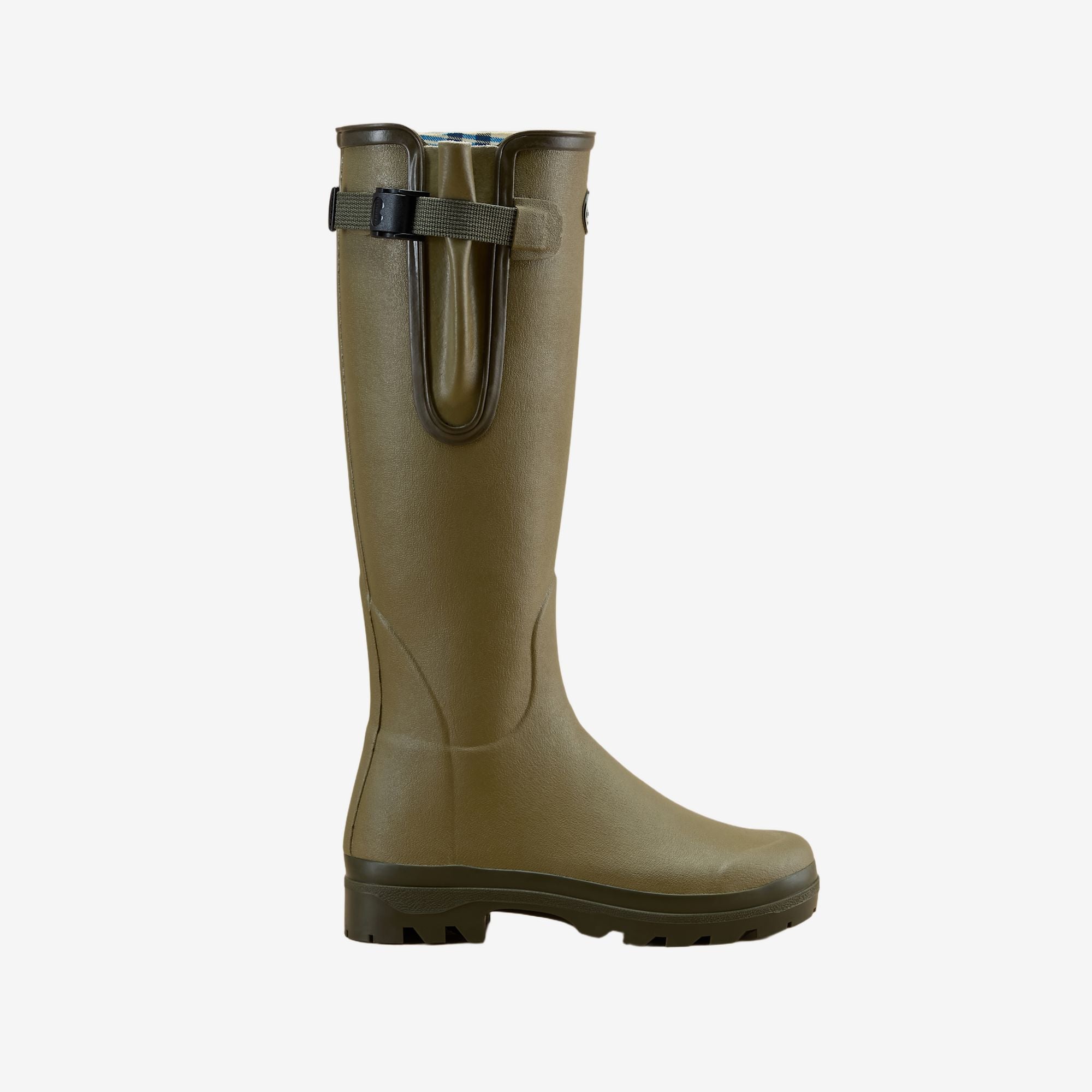
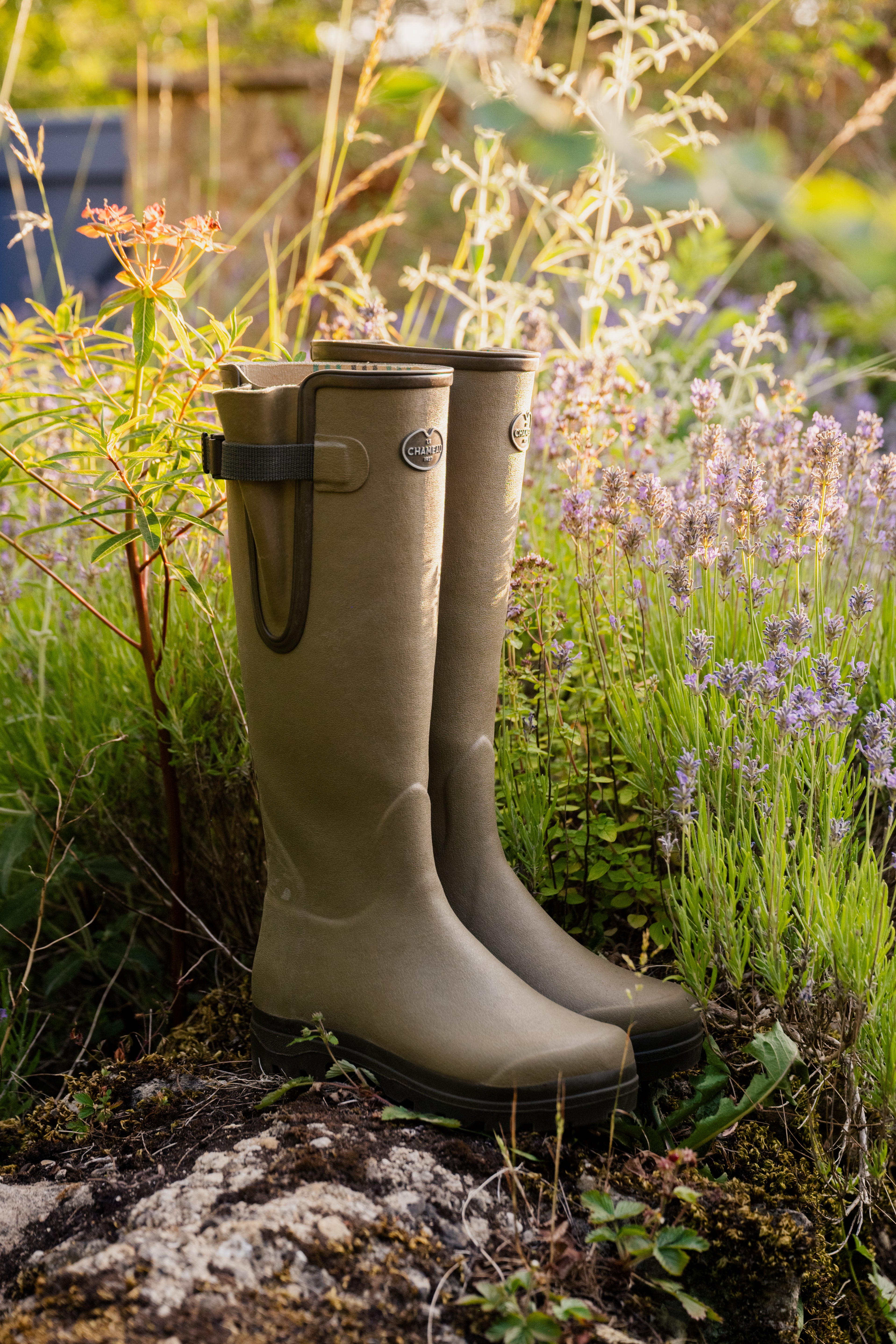
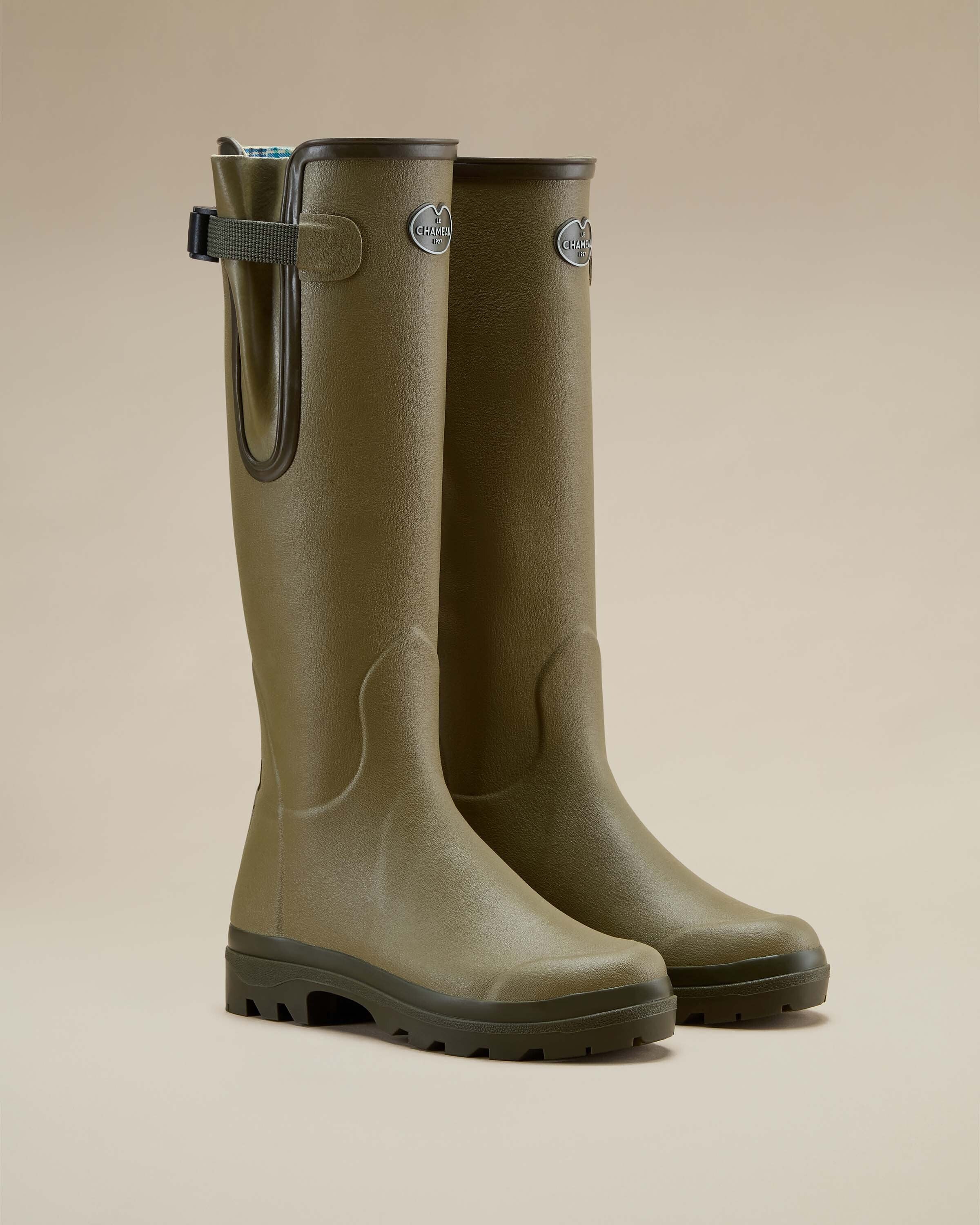
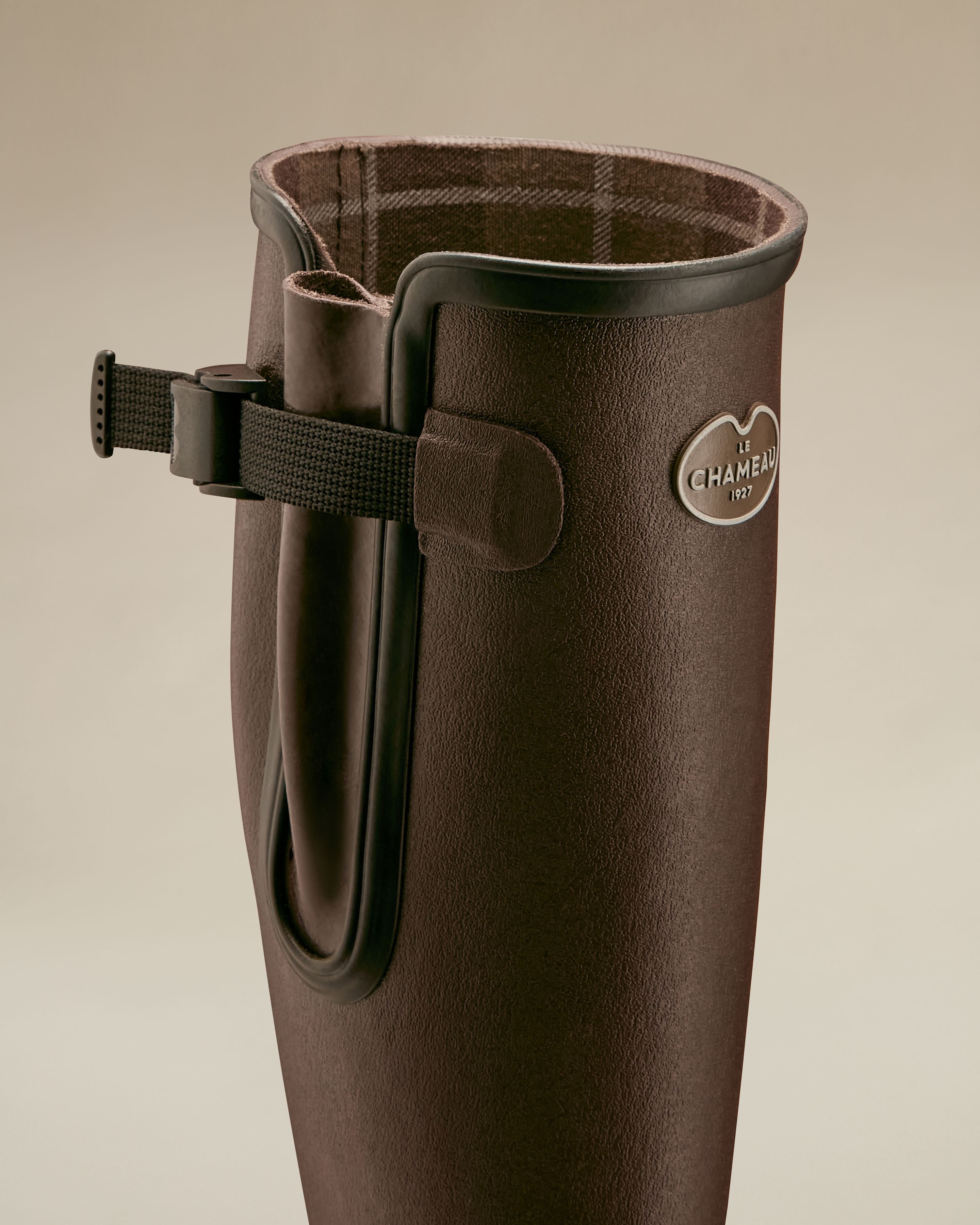
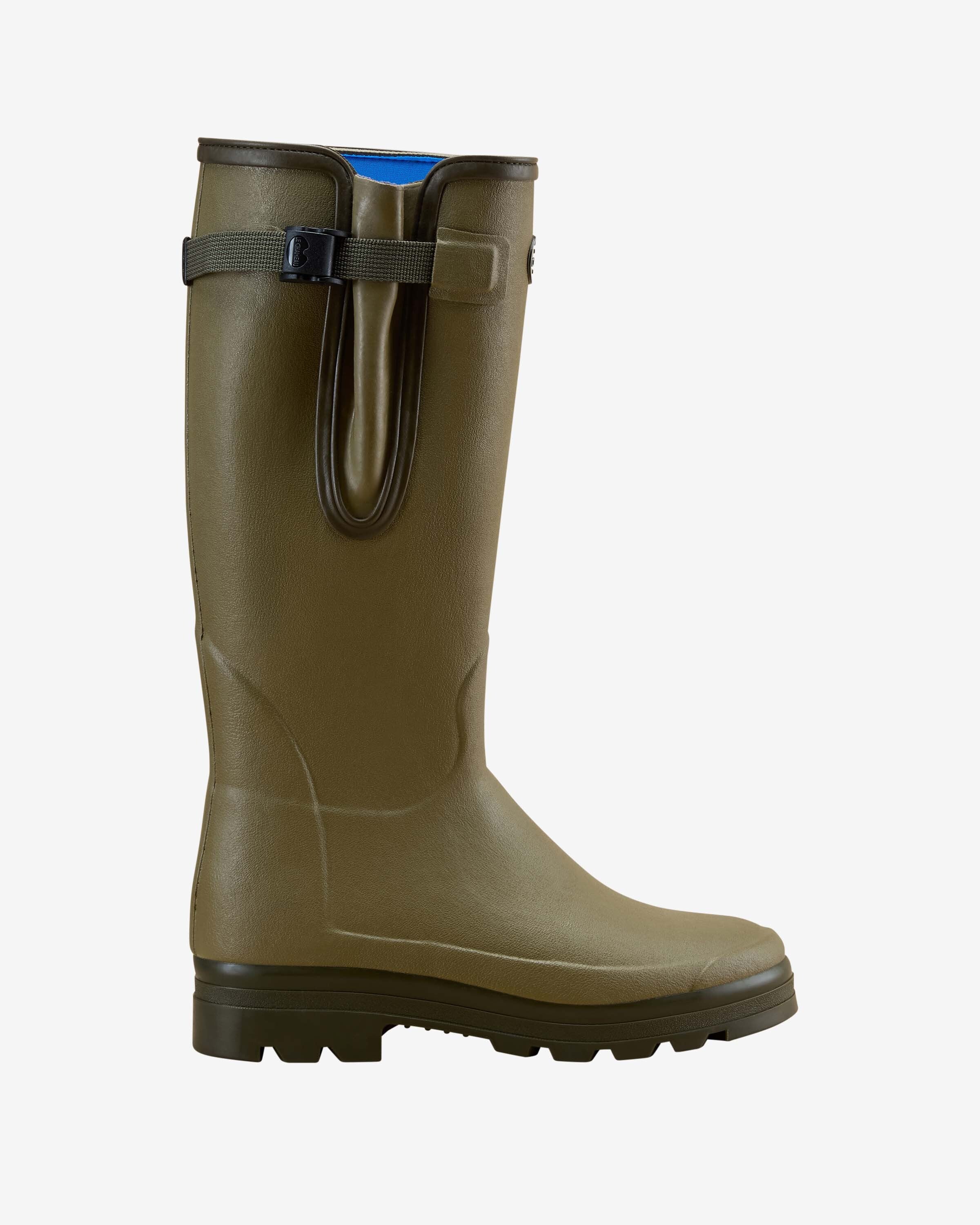
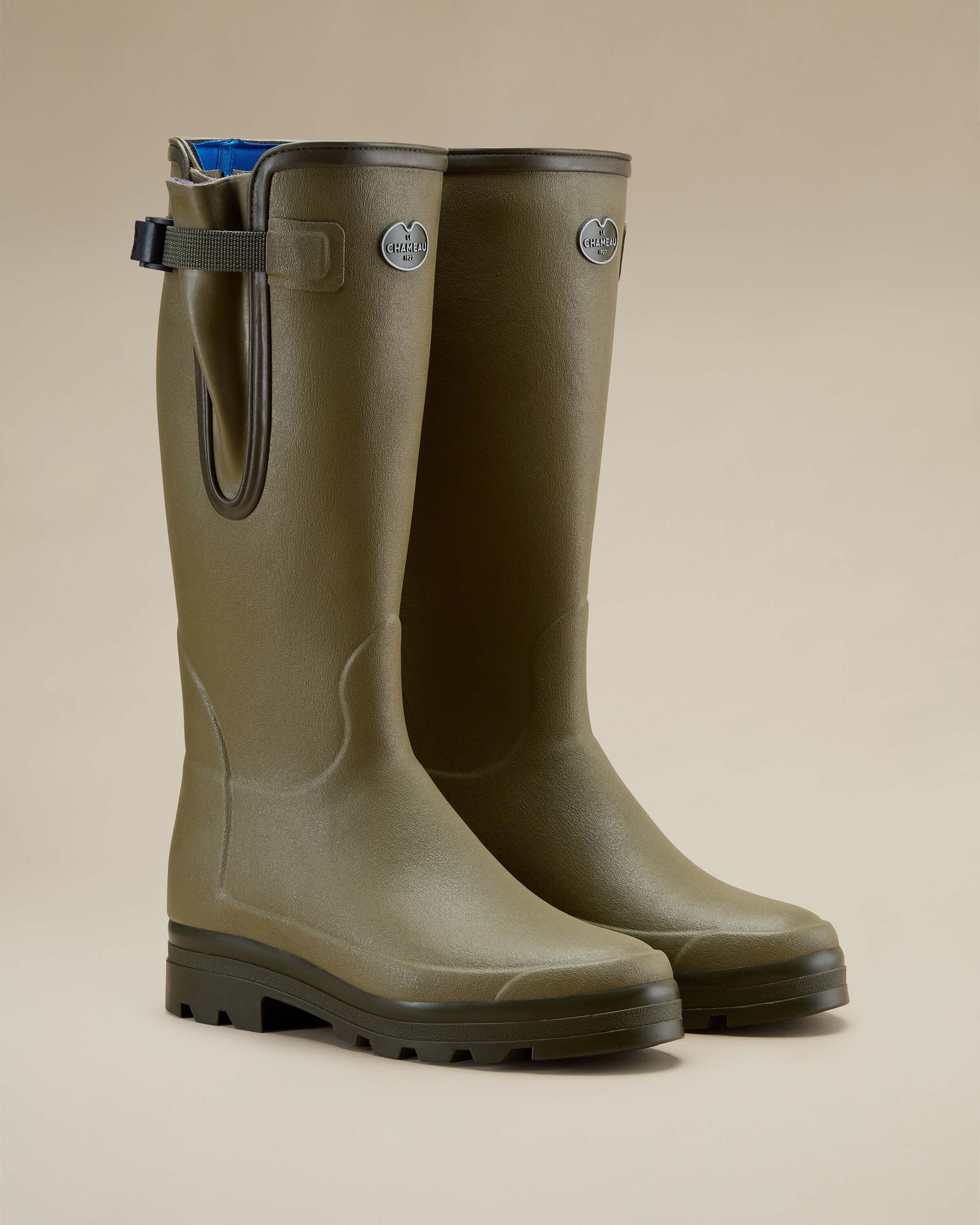
Claire wears Women’s Le Chameau Vierzonord in Iconic Green.
The plan for the future is to farm the land in a way that is as circular as possible; managing it not only for the health of the cows, but also for the health of the landscape and all the other creatures that live here from the insects to the birds, the grasses, the flowers, all of the other wildlife - Claire is especially passionate about dung beetles and their role in the food chain and improving soil health. Having left the grass to grow for so long, we saw an influx of voles on the farm, which subsequently brought in lots of birds like long-eared owls, short-eared owls, barn owls, hen harriers and kestrels. At the moment, we have lots of redwing and fieldfares visiting the farm and feasting on the hedgerow berries.
One of my favourite things to see on the farm is the kestrel, which often hunts over the cows as they move across the land, disturbing all the little mammals, like the voles, field mice and shrews. The kestrel's called Michael, by the way!


How did you get into the farming industry?
I’ve been a farm vet for 11 years now, living in Wales but travelling all over the countryside for my job. I’ve worked with hundreds of farmers and have made some great friends along the way, so I’ve always been in and around the farming industry for a while. Being a farmer, well, there was always that thought that perhaps it could be fun, especially if the right opportunity came up. Around a year or so ago, that opportunity did come up, and since then, I’ve fallen into farming life.
I’ve often found that a lot of people in the farming industry has had a farmer in their family somewhere. For me, having looked into my family history, it was my granddad, who, like many people in India at that time, had the odd goat and cow which they milked and some chickens they got eggs from; everyone it seemed was connected to a farmer in one way or another. Before my grandad left India in the 1950s, he was offered 50 acres of farmland, but in the end, he decided to turn it down and come to England instead. So, I wish I could tell him that his 50 acres in India has turned into 230 acres in North Wales because I'd love to see the look on his face. He was massively into nature and that's part of the reason why I am so into nature and why I want the farm to be as nature-friendly as possible.
So far, it’s been an amazing journey. The farming community is great as well, not only here in North Wales, but all over the UK, especially through the means of social media, people have been really helpful with giving advice and support.
We hear so much about the importance of soil health - "vegetables, to the pasture"
Soil health is really important to talk about in relation to farming and food, and it shouldn’t be underestimated. Most of life is sustained by the soil, including what we grow in it, from our fruit and vegetables to the pasture that we grow and feed to our grazing animals, which will eventually become food for us. Soil contains lots and lots of different things, from bacteria to fungi and all the tiny insects, each as important as the next.
For me, my cows are central to my farming system, managing them in a way that improves the health of the soil. So, essentially this means moving them to different sections of the farmland often, resting and recovering the land so the grasses have really deep root systems that can get down and reach the minerals in the soil, which then comes up through the leaves to improve the health of my animals. Ultimately, this all leads to bettering human health as well. Everything that grows out of the ground is healthier as a result of the soil being healthier. As I said, I’m still learning as I go.
How could someone get involved in farming, especially if not from a farming background?
My introduction to farming was being a vet. I had no intention of being a farm animal vet until I went to vet school and I definitely had no intention of becoming a farmer, which I absolutely love now. What advice would I give to someone? Firstly, learn a bit more about where your food comes from, that is really important. I think that's the first step, you begin to be interested in where your food comes from, and opportunities will open up.
Also, speak to farmers in your area. Ask them how they produce their food. Get some work experience on some of those farms. Going to vet school, we had to do an awful lot of work experience on farms and that was really beneficial for me in understanding how our food is produced. Also, there's lots of educational resources out there as well, reading books on farming and nature, which go hand-in-hand. Some of my favourite books include Braiding Sweetgrass by Robin Wall Kimmerer, Rooted by Sarah Langford and English Pastoral by James Rebanks.
How do your Le Chameau boots serve you across the farm?
My Le Chameau boots are great, I wear them all around the farm and surrounding land. As we are high up in the Welsh hills, it’s often very, very wet like today but my feet are really warm and completely dry. My Le Chameau wellies are especially important on dewy mornings, when I wade through the long, wet pastures to check on my animals. They are absolutely perfect, really reliable and comfy.


World Soil Day: What The Experts Say
Niels Corfield, an Independent Farming Advisor and Trainer, who specialising in soil health remarks, “Soil health underpins all land and essentially most of our food - cereals and meat – comes from that. Healthy food depends on healthy soil. If we improve soil health, we can improve the absorbance of water into the soil, reducing the risk of drought in summer and flooding in winter.
“If you’re out on a shoot in midwinter, you’ll be able to understand the health of the soil by the amount it sticks to your boots. It’s often said that if, by the end of the day, you are an inch taller with the mud stuck to your boots, that is evidence of poor soil health. Good soil health has a spring to it and doesn’t stick to your boots so much. Healthy soil is loose, open and crumbly, with a sponge-like structure due to the biology and root structure within the soil, which then allows the water to percolate it.”
Learn more about Niels Corfield and follow his journey on Instagram.
If you, like Claire, live and work in the countryside and need comfortable and durable wellies that you don’t need to worry when you’re out and about, especially during those wet early dewy mornings, look no further with Le Chameau’s range of master crafted boots.
Master the Soil: On-Farm with Claire Whittle
Claire Whittle is a new entrant farmer and experienced vet who works deep within rural North Wales. At a lofty 1400 feet above sea level, Claire manages Caedicws Farm, on 230 acres with a mixed herd of native breed cows. Le Chameau visited Claire on her farm in the steep terrain of Wales to ask her about life on the farm, her connection to nature and its local wildlife, and as a Le Chameau advocate, how wearing our boots serves her on the farm.
Claire, tell us a little about the farm and your farming practices
I’m a new entrant farmer at Caedicws Farm here in Wales, so I’m very much at the beginning stage of it all, learning as I go. The first thing I did with the farm was to leave much of it to grow for a year without any human or animal interference like grazing animals to see what happened, which species grew in which field, for example.
Since then, I’ve introduced native breeds of cattle to the farm, including Angus-Welsh Black crosses, which fit in pretty well in this landscape, and Belted Galloways and Riggit Galloways. The importance of having rare breeds on this farm is that they are really suited for this particular environment. With very interchangeable weather here in the Welsh hills, winter being incredibly cold and summer can be pretty hot at times, these breeds of cattle thrive in this climate, they can be outside for the majority of their lives and they can live on what we would call ‘rough pastures’.
Claire wears Women’s Le Chameau Vierzonord in Iconic Green.
The plan for the future is to farm the land in a way that is as circular as possible; managing it not only for the health of the cows, but also for the health of the landscape and all the other creatures that live here from the insects to the birds, the grasses, the flowers, all of the other wildlife. Having left the grass to grow for so long, we saw an influx of voles on the farm, which subsequently brought in lots of birds like long-eared owls, short eared owls, barn owls, hen harriers and kestrels. At the moment, we have lots of redwing and fieldfares visiting the farm and feasting on the hedgerow berries.
One of my favourite things to see on the farm is the kestrel, which often hunts over the cows as they move across the land, disturbing all the little mammals, like the voles, field mice and shrews. The kestrel's called Michael, by the way!


 Stewarding the Downs: Life at Cowdray EstateLire l'article
 Harvesting Apples this HalloweenLire l'article
 Country Shows: The Best of the Rural LifeLire l'article
 At One with Nature: Fly Fishing with Marina GibsonLire l'article
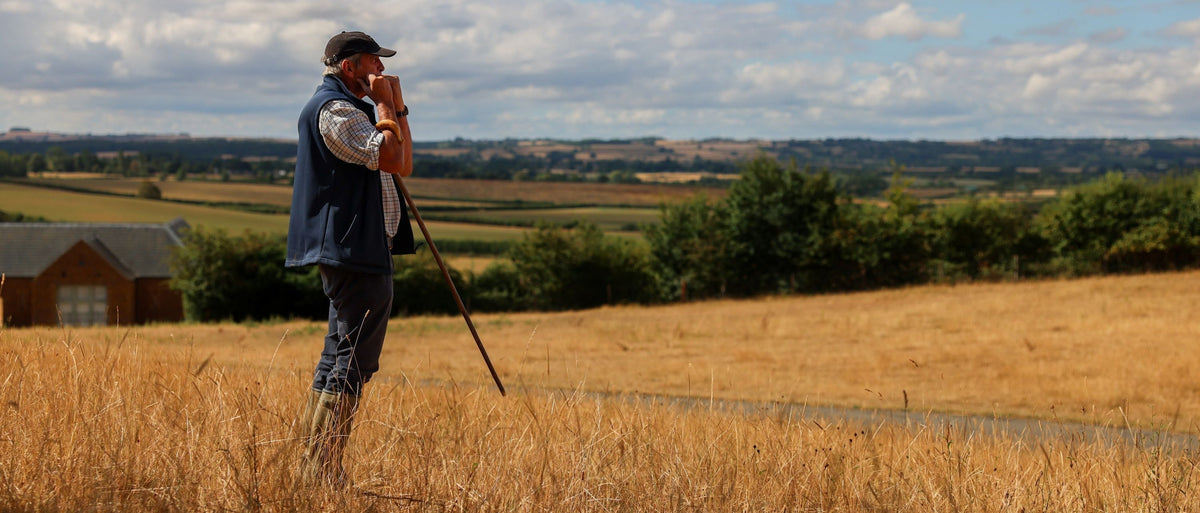 At Daylesford: One Man and his SheepdogLire l'article
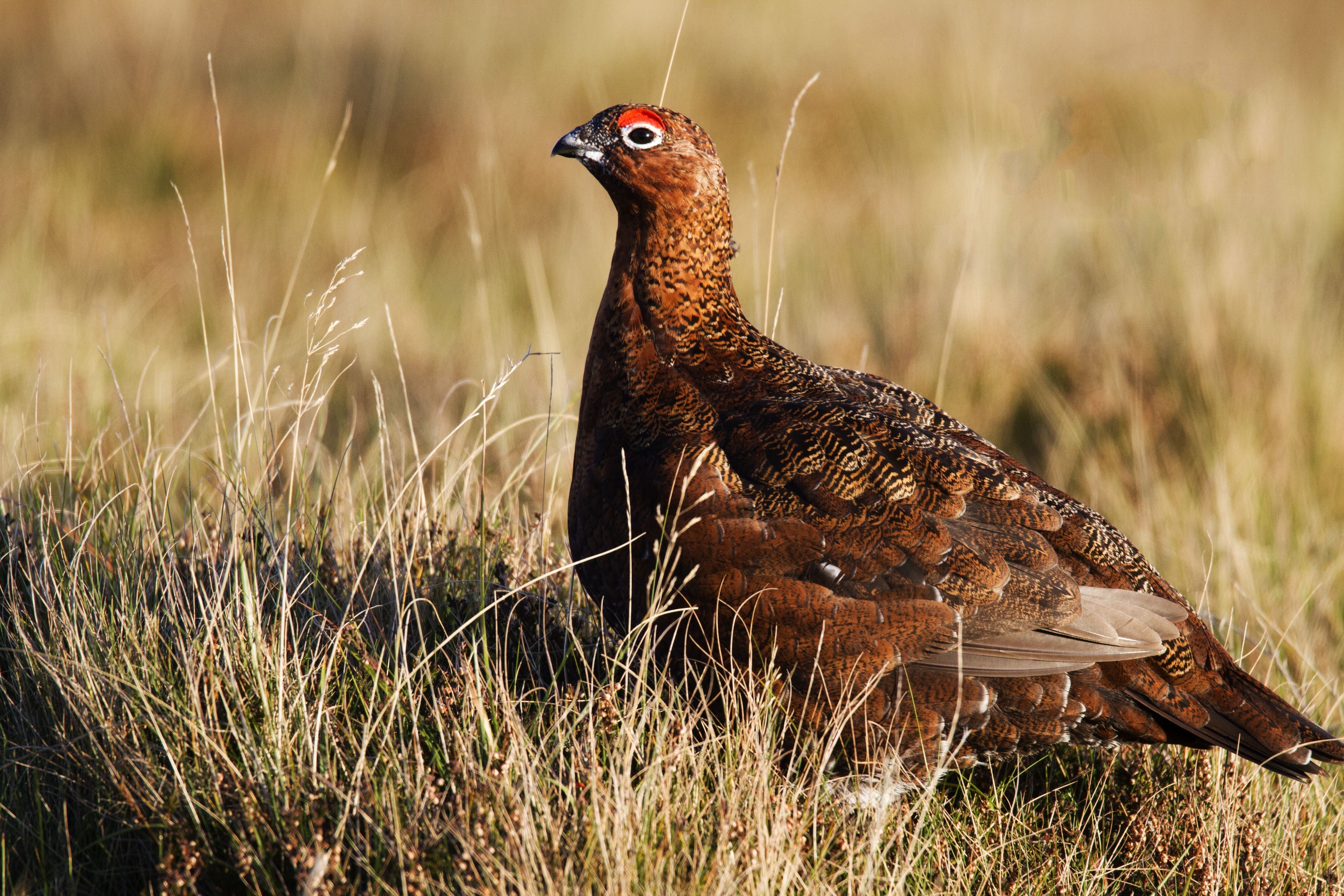 The Glorious Twelfth: All You Need to KnowLire l'article
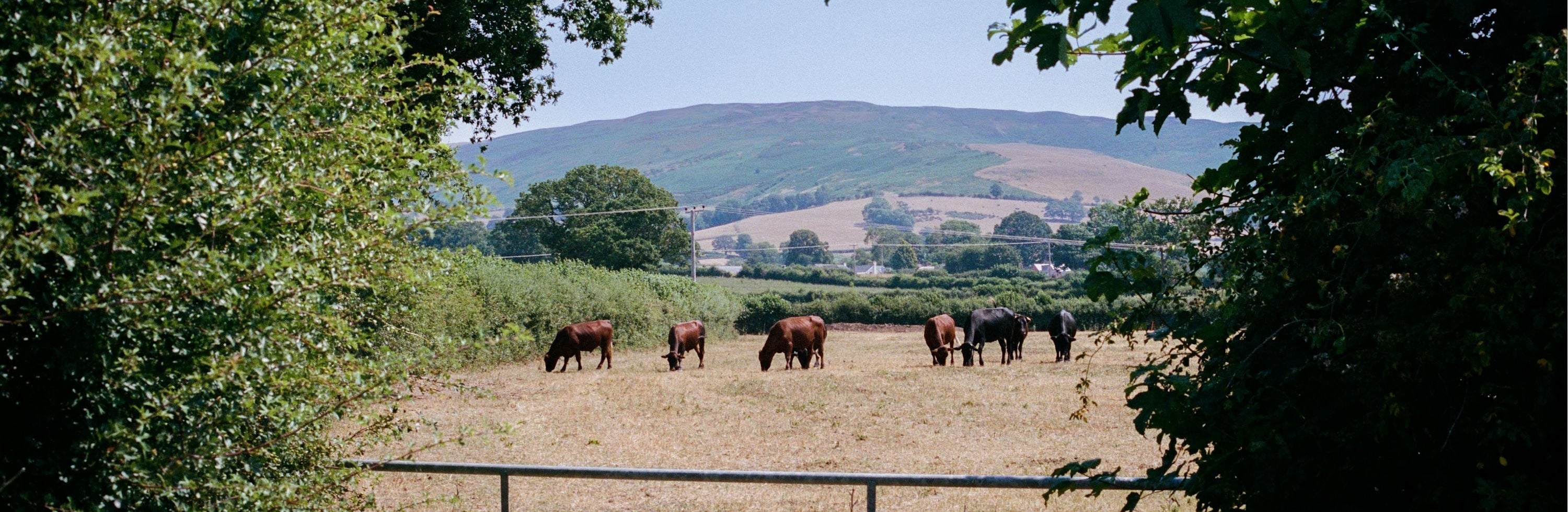 On-Farm this Summer: Farming in a Changing ClimateLire l'article
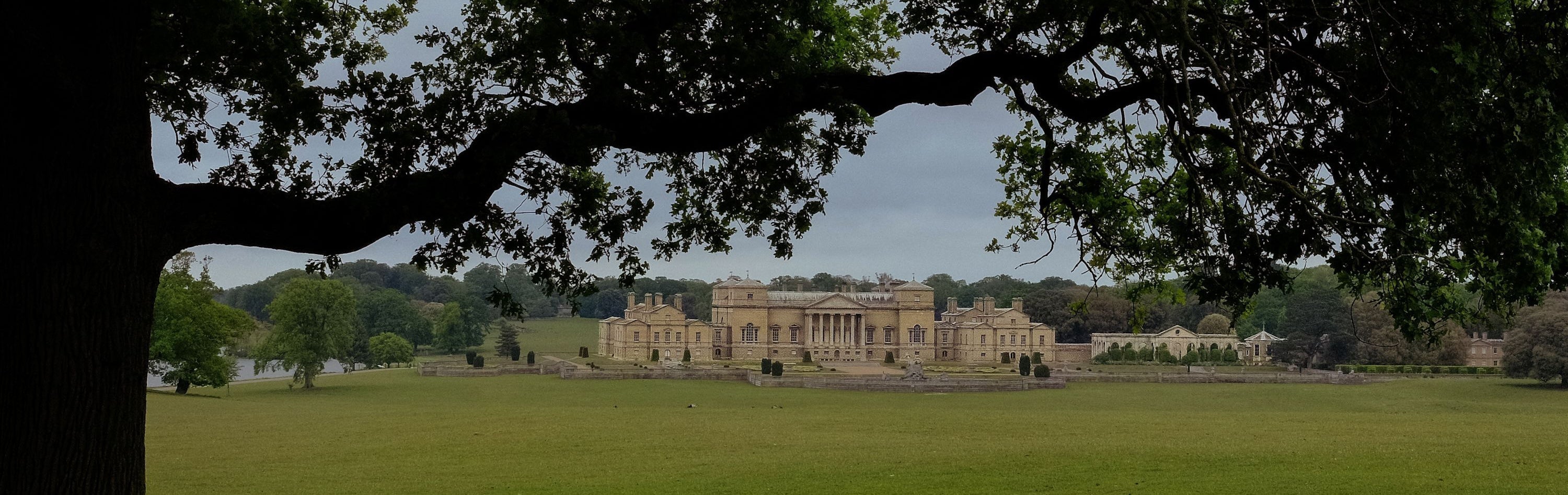 Discover Holkham: Glasshouses, Gardens and Glorious WalksLire l'article
