





Le lien entre le cheval et son cavalier : Tom McEwen

Think about the most iconic moments in sporting history, when profession and professional become almost one, and for the viewer, moments that are poetic; legendary. No more is this bond more apparent than in horse riding, the perfect moment when horse and rider are one.
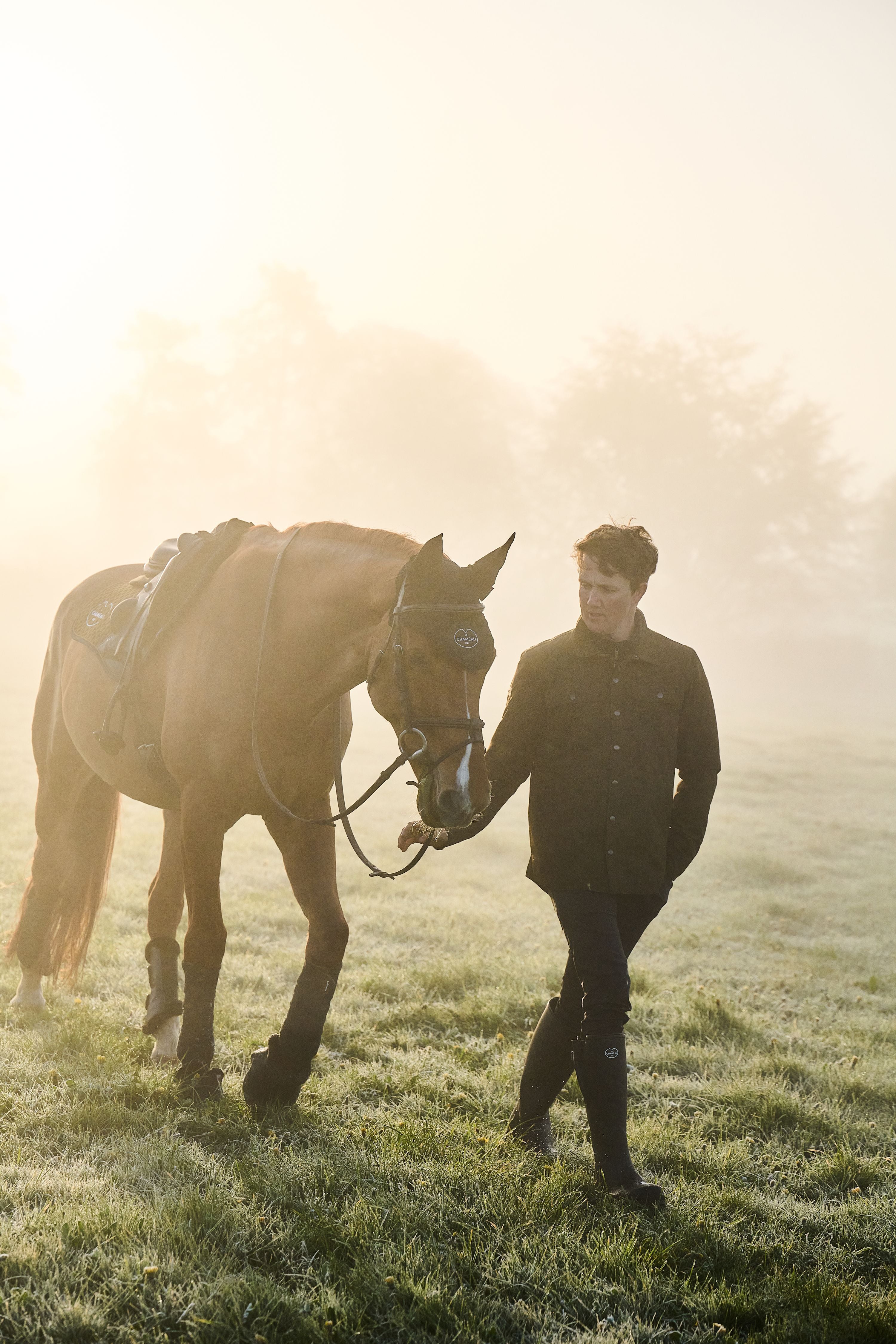
To explain, British Olympian and Le Chameau Ambassador, Tom McEwen, on an atmospheric misty morning at his stables in Gloucestershire, tells us how this bond is built, plus we find out what a day in the life of a British Olympic Equestrian is really like.
Join us as we gain exclusive entry into the Royal grounds of Gatcombe Park. Set within one of most picturesque landscapes the British Isles has to offer, Gatcombe Park stables is where Tom trains his horses, a patchwork of rolling hills and lush meadows, the grounds boast a labyrinth of bridleways, country lanes and paddocks.
Horse riding has forever been one of the country pursuits that has run through the heart of Le Chameau since it’s foundation in 1927, serving those who have a deep connection with their horse and the land on which they hack, gallop and jump over. Our boots have been worn by professionals and enthusiasts alike for nearly a hundred years.
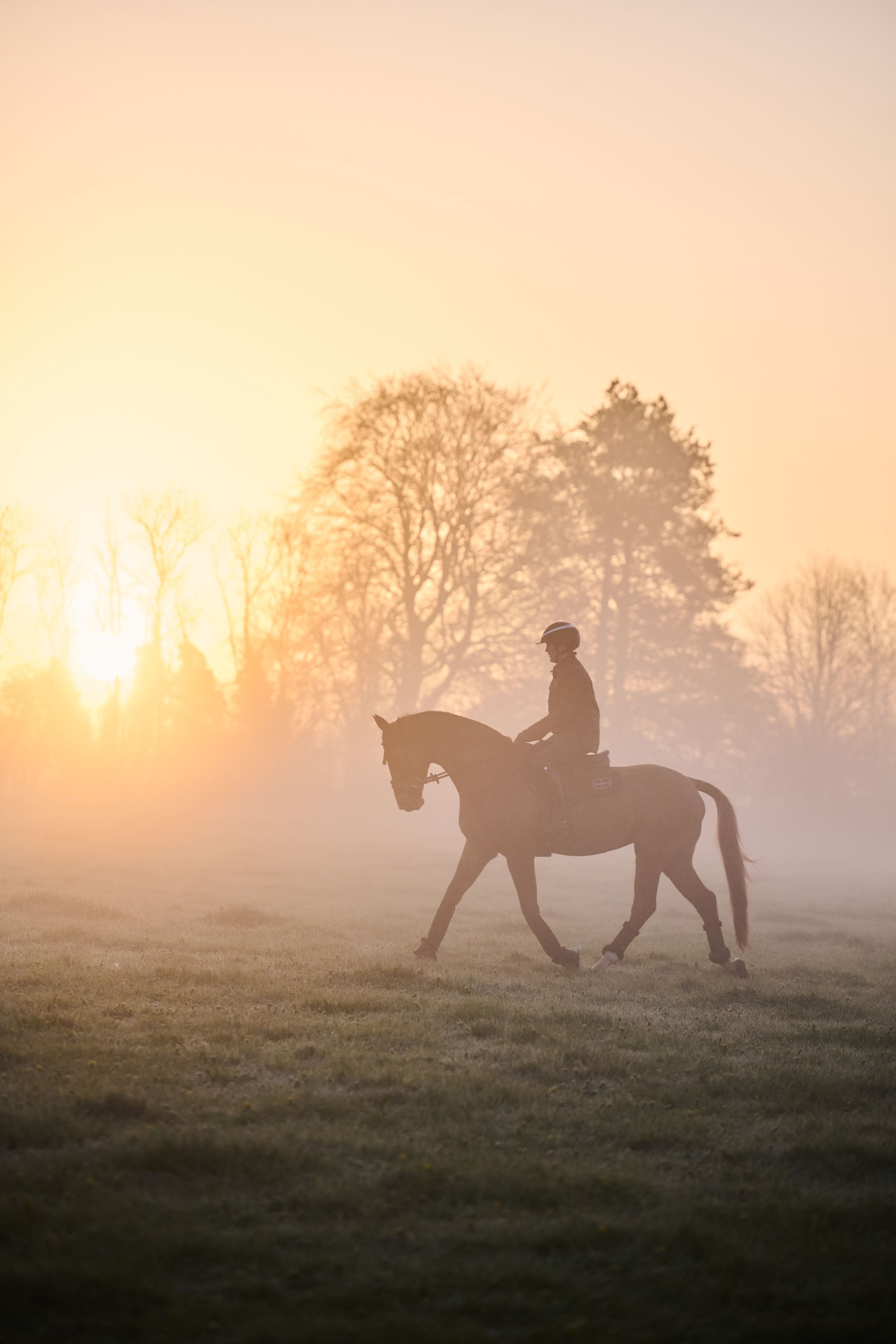
Tom, firstly, tell us a little about your stables and why Gatcombe Park to train your horses?
Welcome to the stables here at Gatcombe Park, where we have 17 horses, one a show jumper and the others all in competition for eventing. Gatcombe is one of the best places for eventing, it has had Her Royal Highness Princess Anne, Captain Mark Phillips and Zara Tindall all based here, having won numerous Olympics, Worlds, Europeans, Badmintons and Burghleys. It is really like a mini-Mecca of eventing.
The grounds are just perfect for what we need. The fact that there is grass everywhere, you can get the horses out, get them fit, they can feel free and relaxed, and it is quiet. It’s just a lovely place to be, to be honest.
For those who may not know, how would you describe what you do?
What we do is quite a complicated thing to explain to someone who isn’t completely horsey, but I often say to people, we are an equestrian version of triathlon. We are the only Olympic sport which male and females compete against each other, and of course, we are the only Olympic sport that involves horses, which is why I think it is so special to have that close relationship to an animal.
In terms of competing, we have the dressage to begin with that shows elegance, power and harmony between horse and rider. It involves riding to a set routine and route, and obviously the easier you flow through the route or line, the better your mark becomes. Very similar to doing gymnastics. The second phase would be cross-country, which runs over anything between 8 to 12 minutes. This is a real test of endurance and learning to adjust to the length of the course. Then your third phase, which is on another day, is show jumping. This tests if you have done all your conditioning right. This event is all about presenting your ability to balance and lead the horse elegantly, the horse needs to be relaxed and focused. So, yes, that’s really the triathlon for horses.
What does a typical weekday look like for you?
The team here start at around 7.00am and finish at 5.00pm, which is basically the run of it. I start riding at about 7.30am, maybe sometimes a little before or after that depending on the day and events coming up. Each horse is different of course, so one horse may have something on that weekend and another horse won’t, so it’s all about knowing the schedule in the calendar year and training to each horse’s needs. On a normal day, I would ride between six and ten horses. We have many horses running at shows at the moment so they will have a few days off afterwards, or if we are preparing for something on the weekend, we usually ride a few more horses to get them into shape. So, to answer your question, each day is very varied. There is a continuous steady flow of action going on at the stables without it being too hectic.
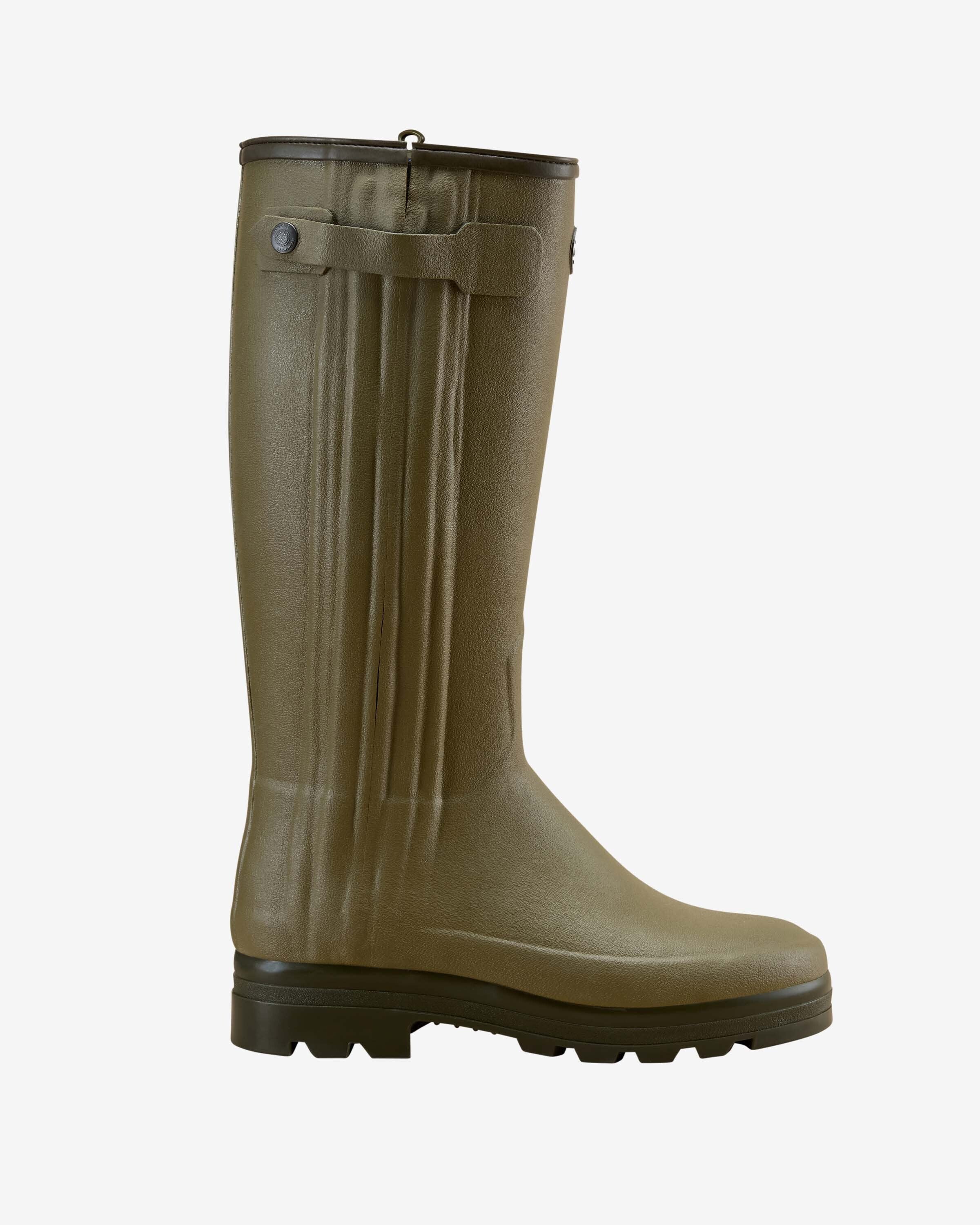
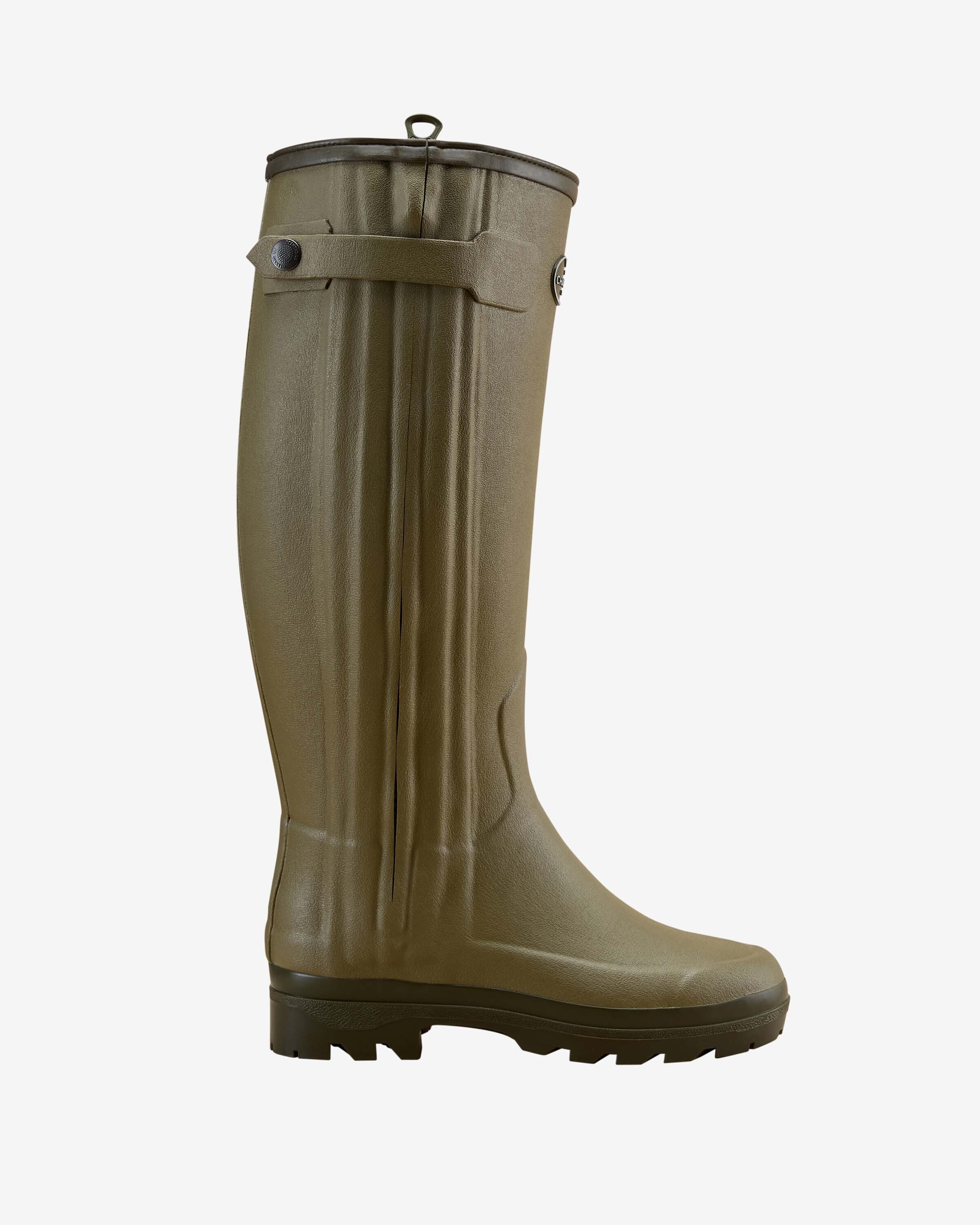
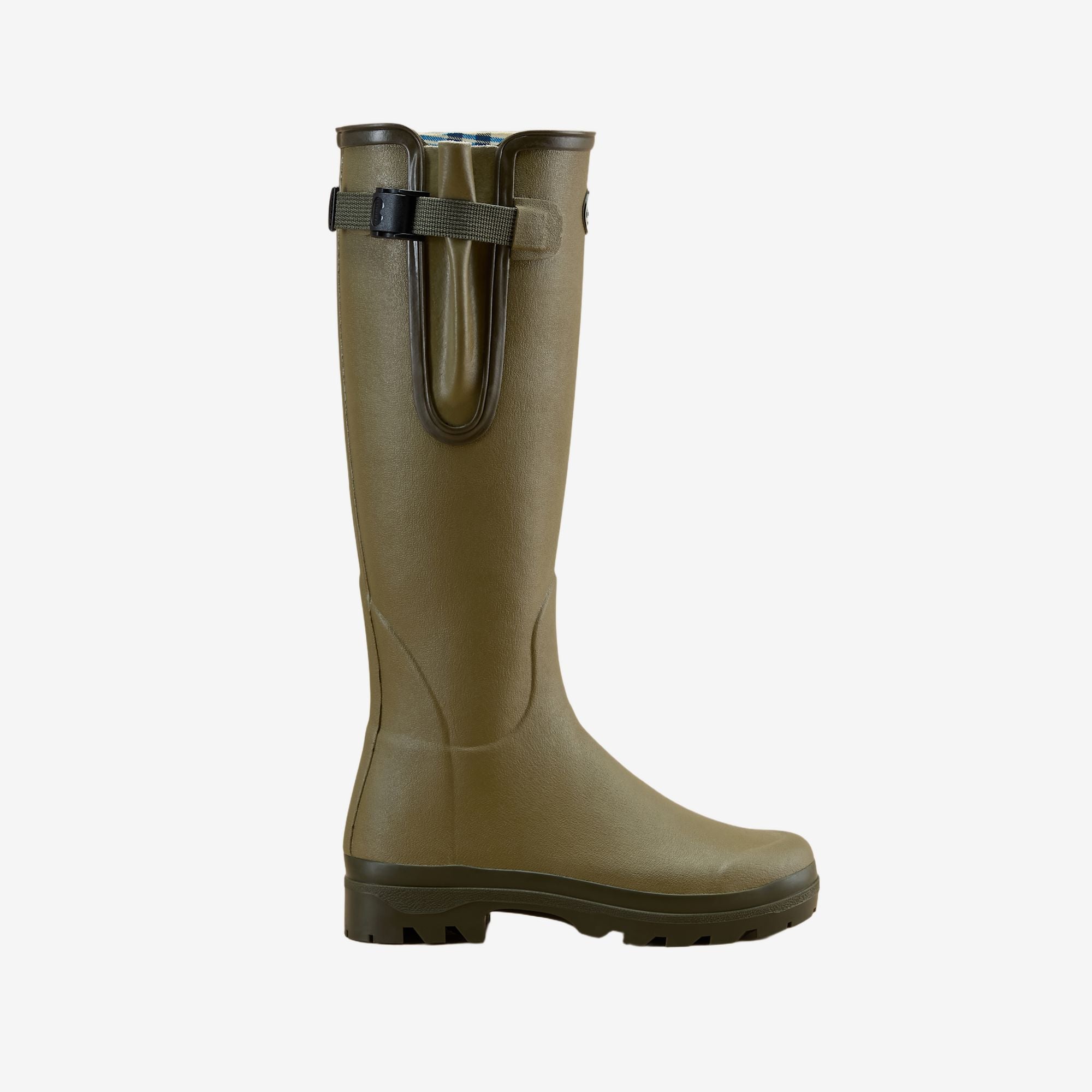
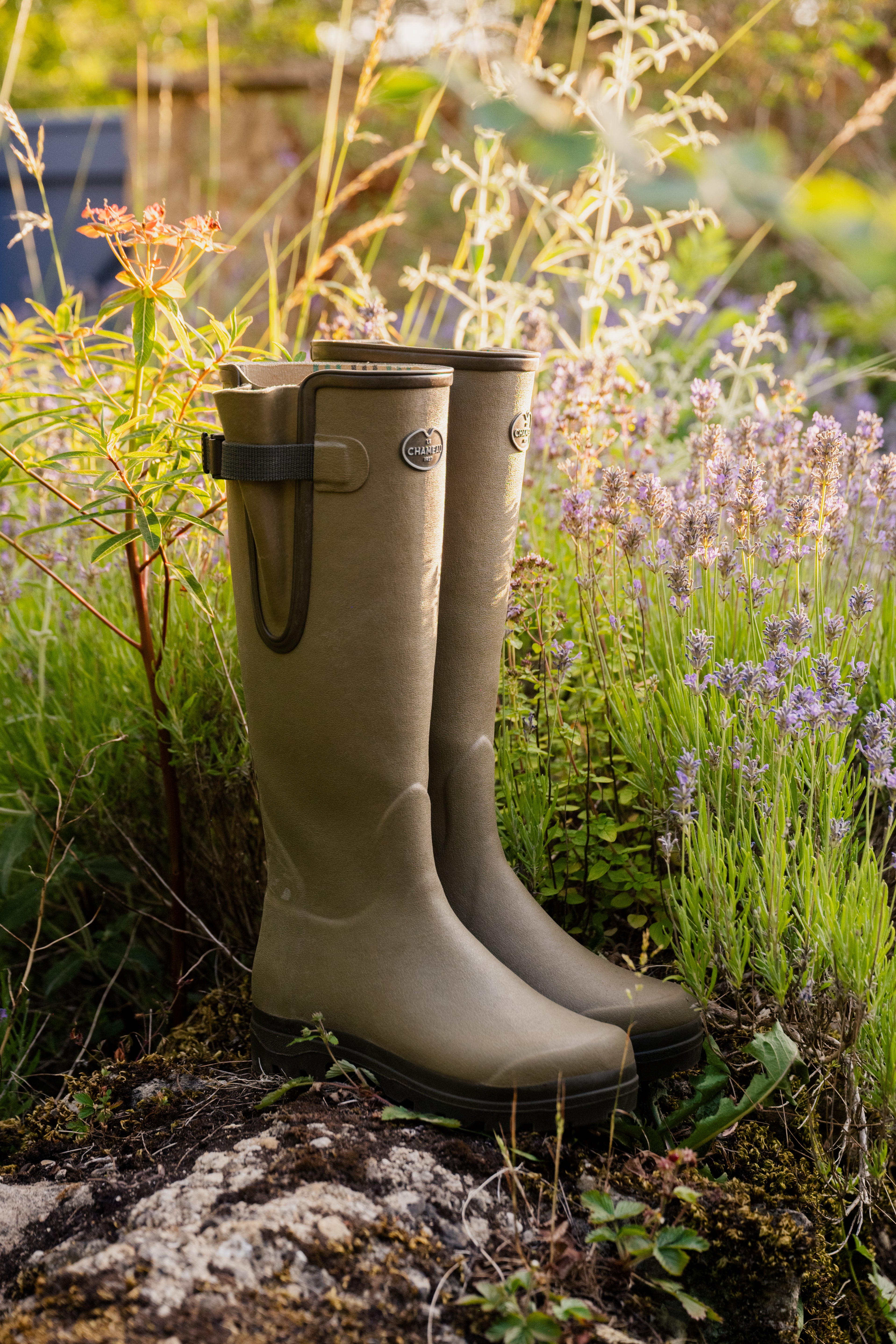
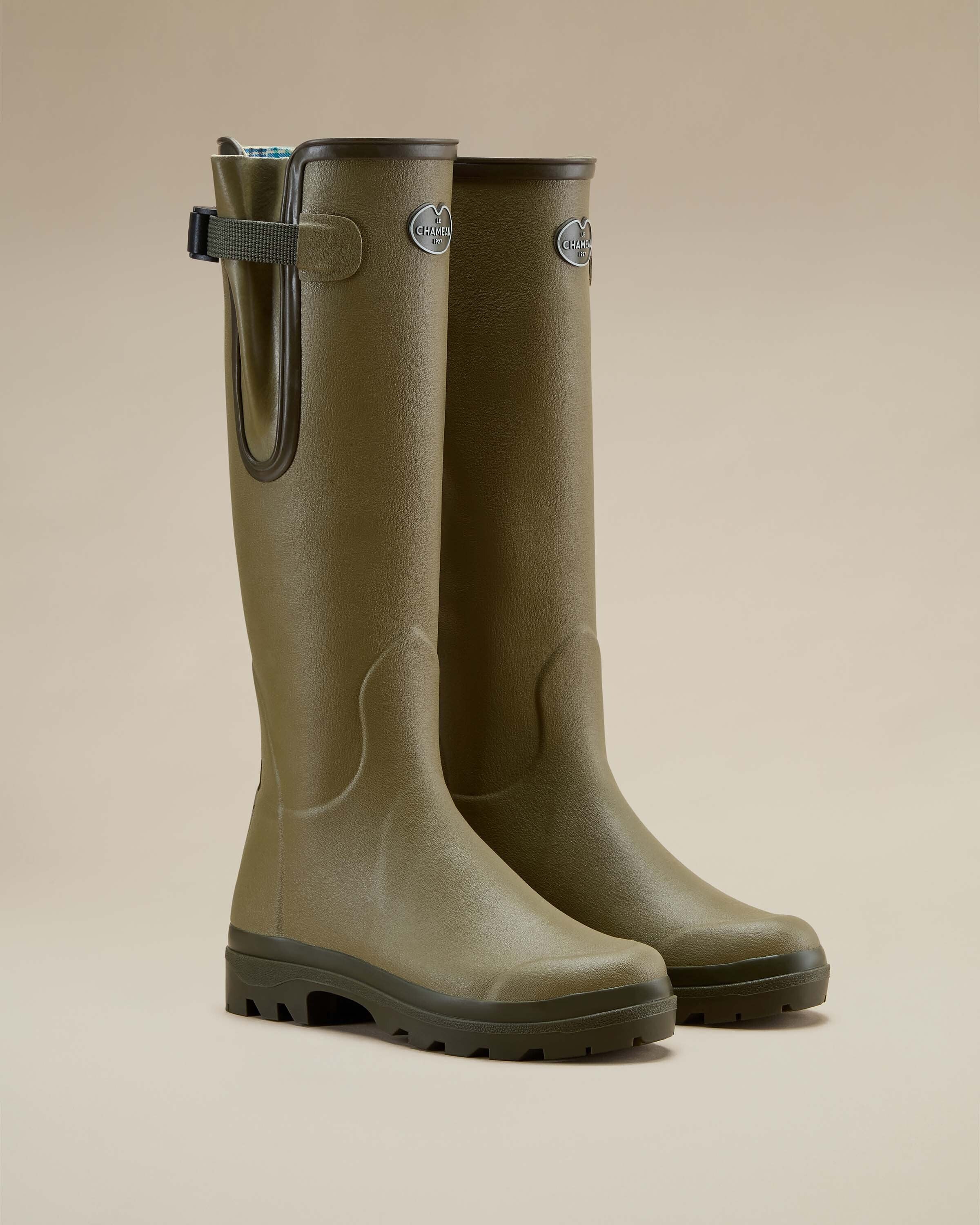
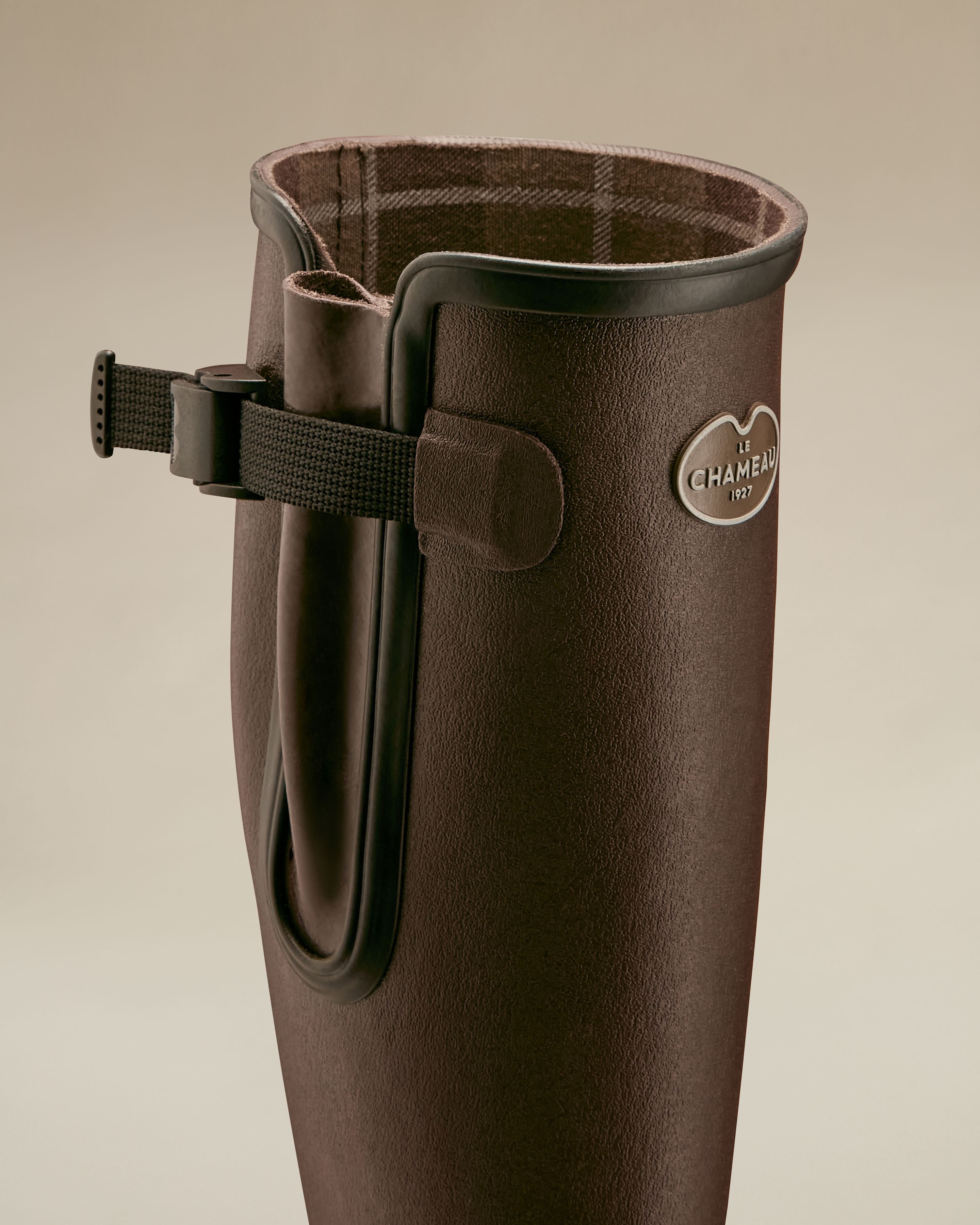
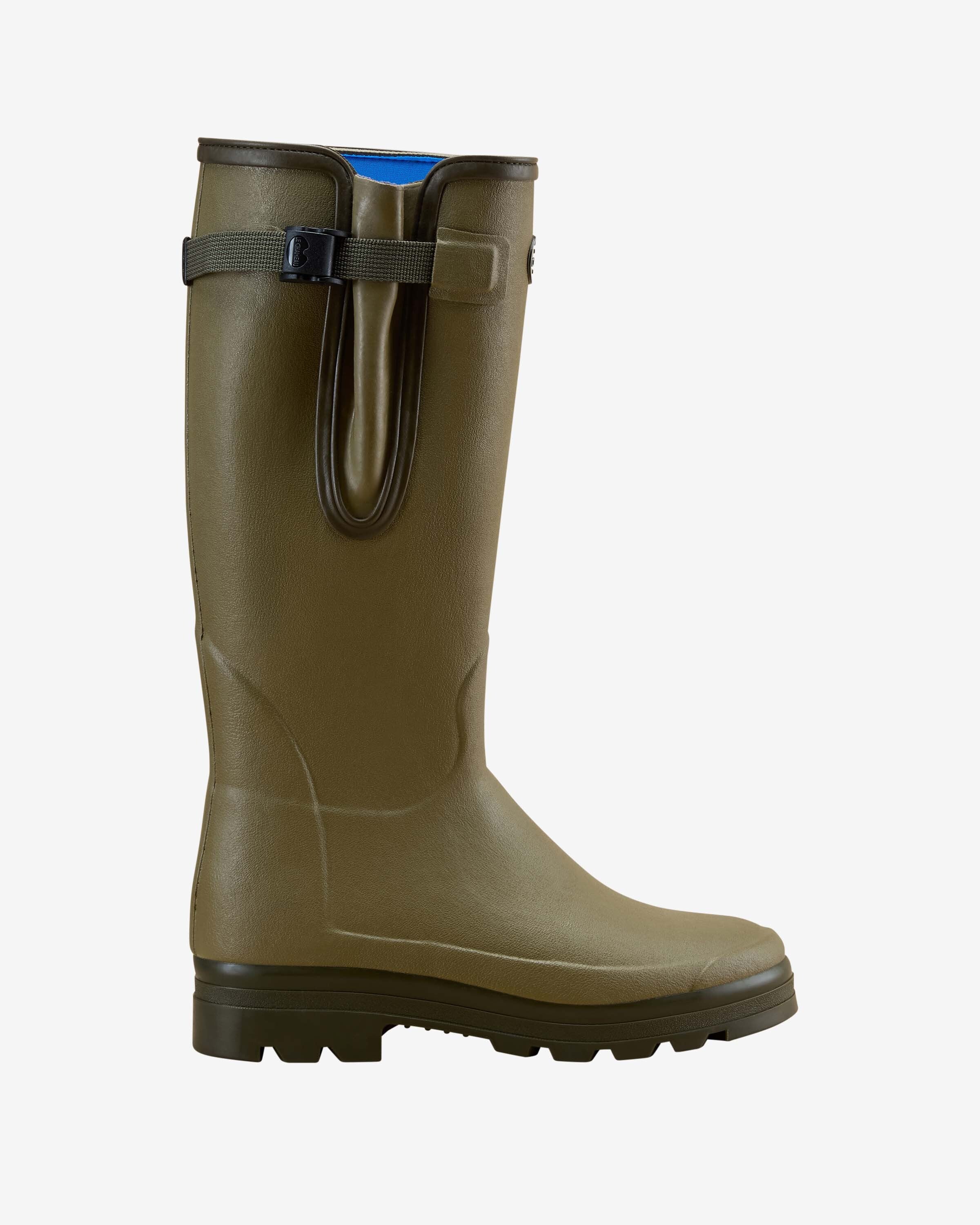
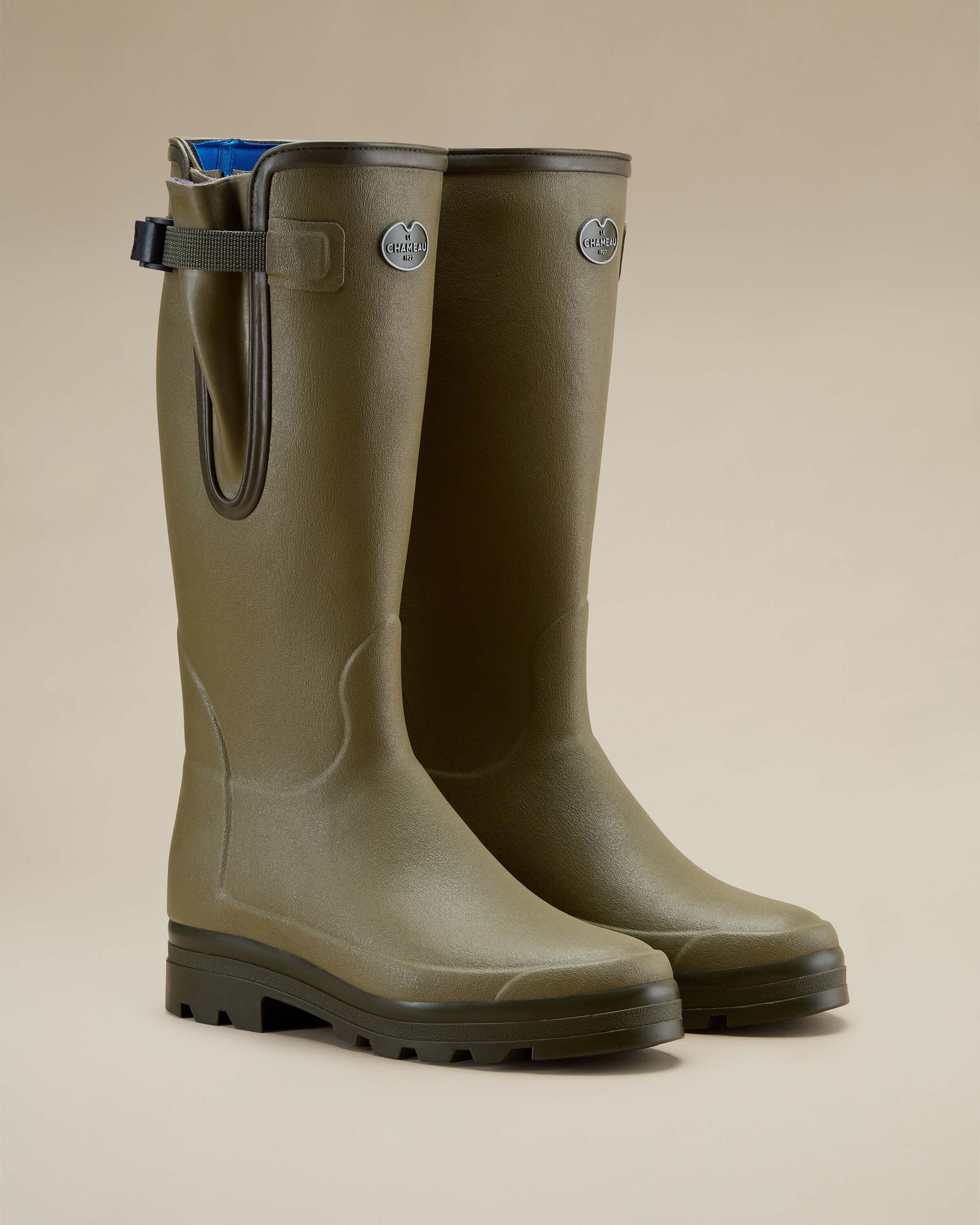
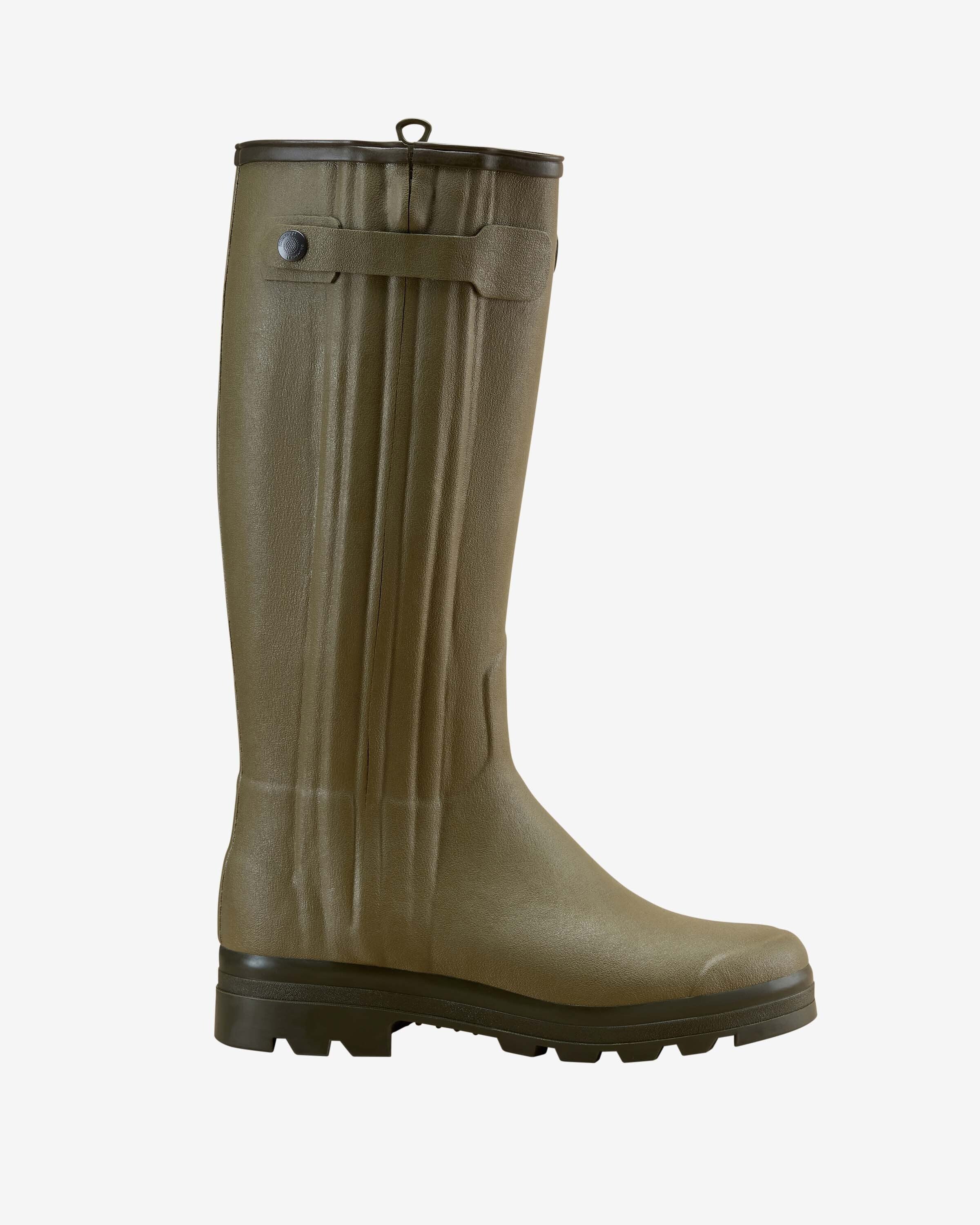
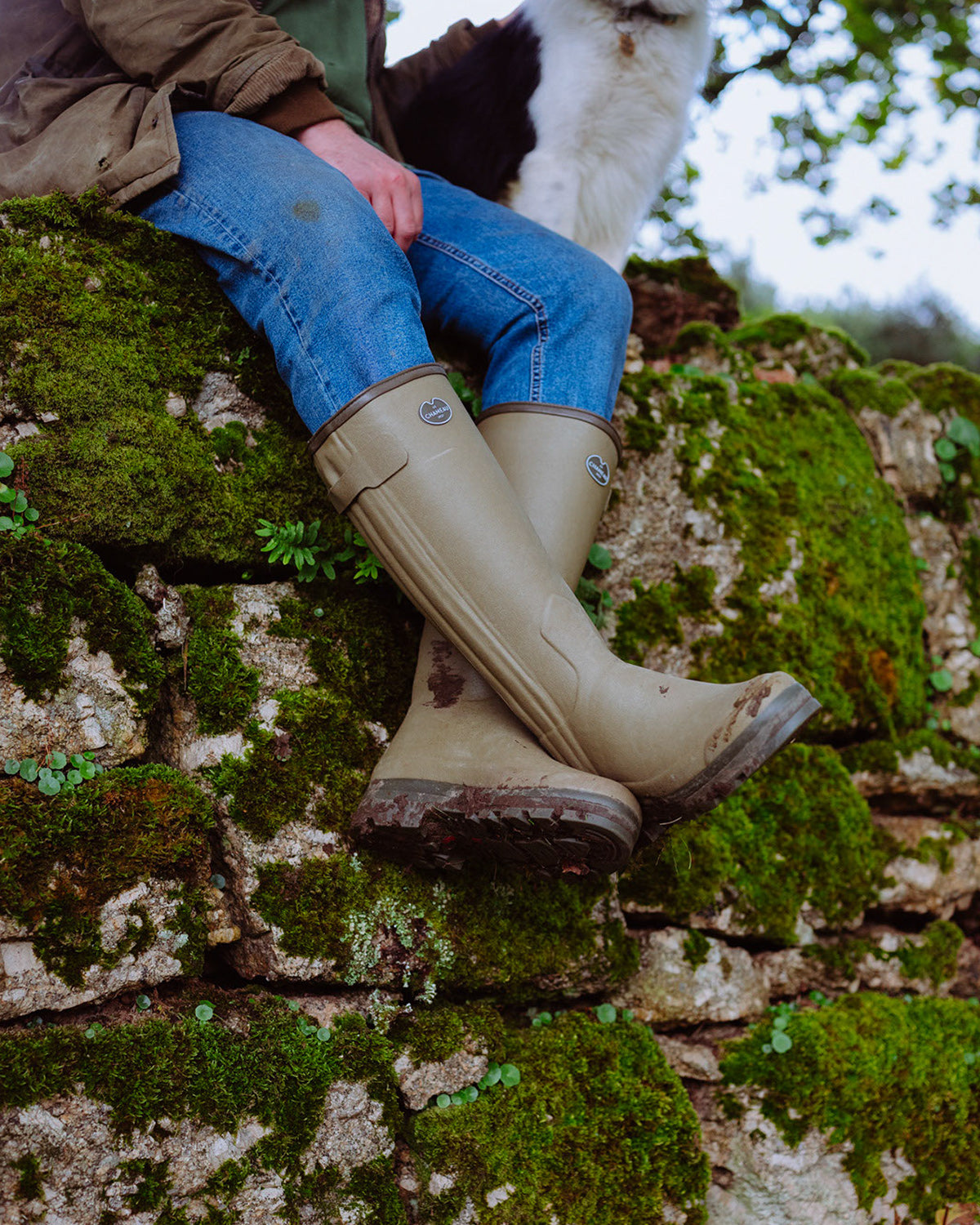
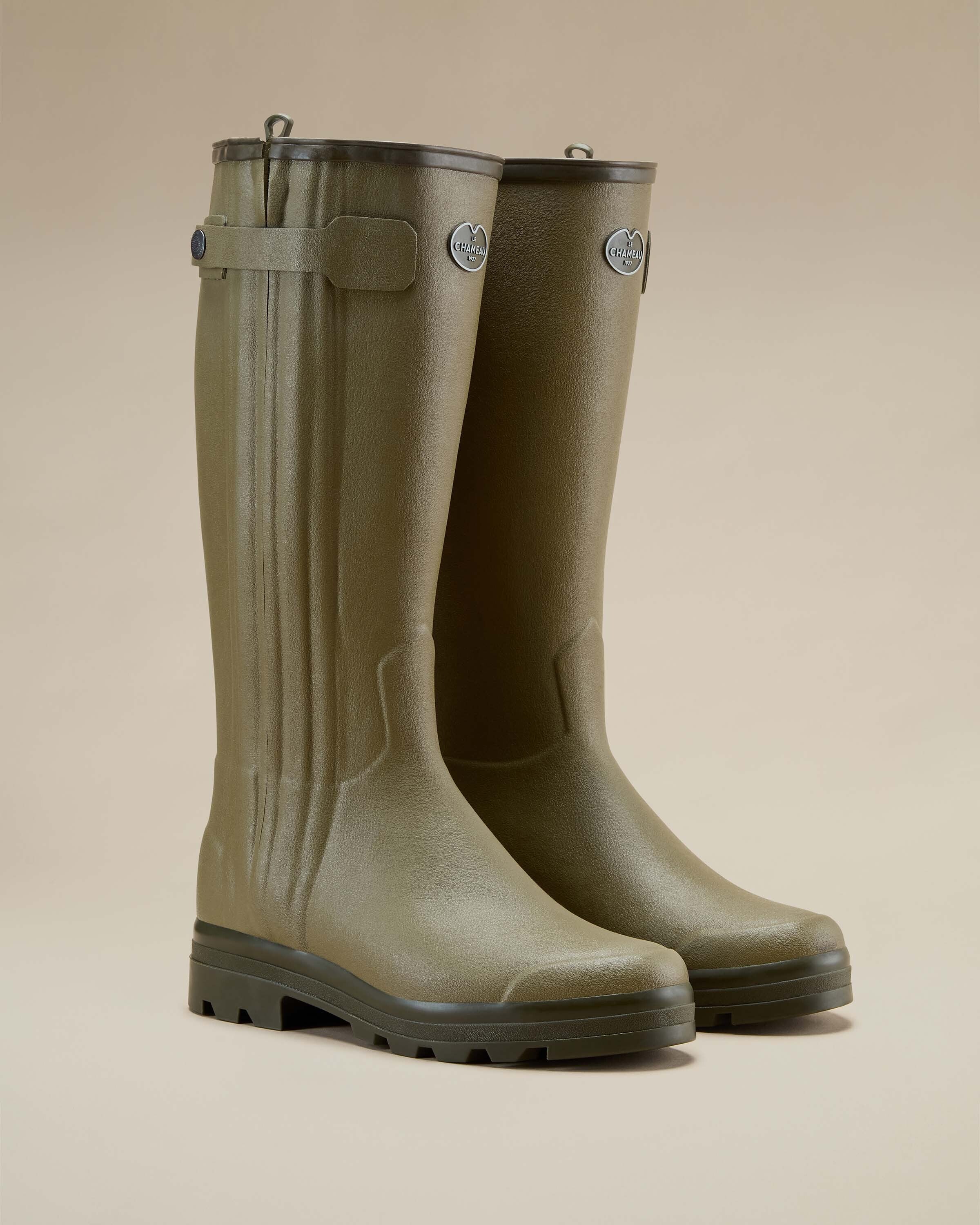
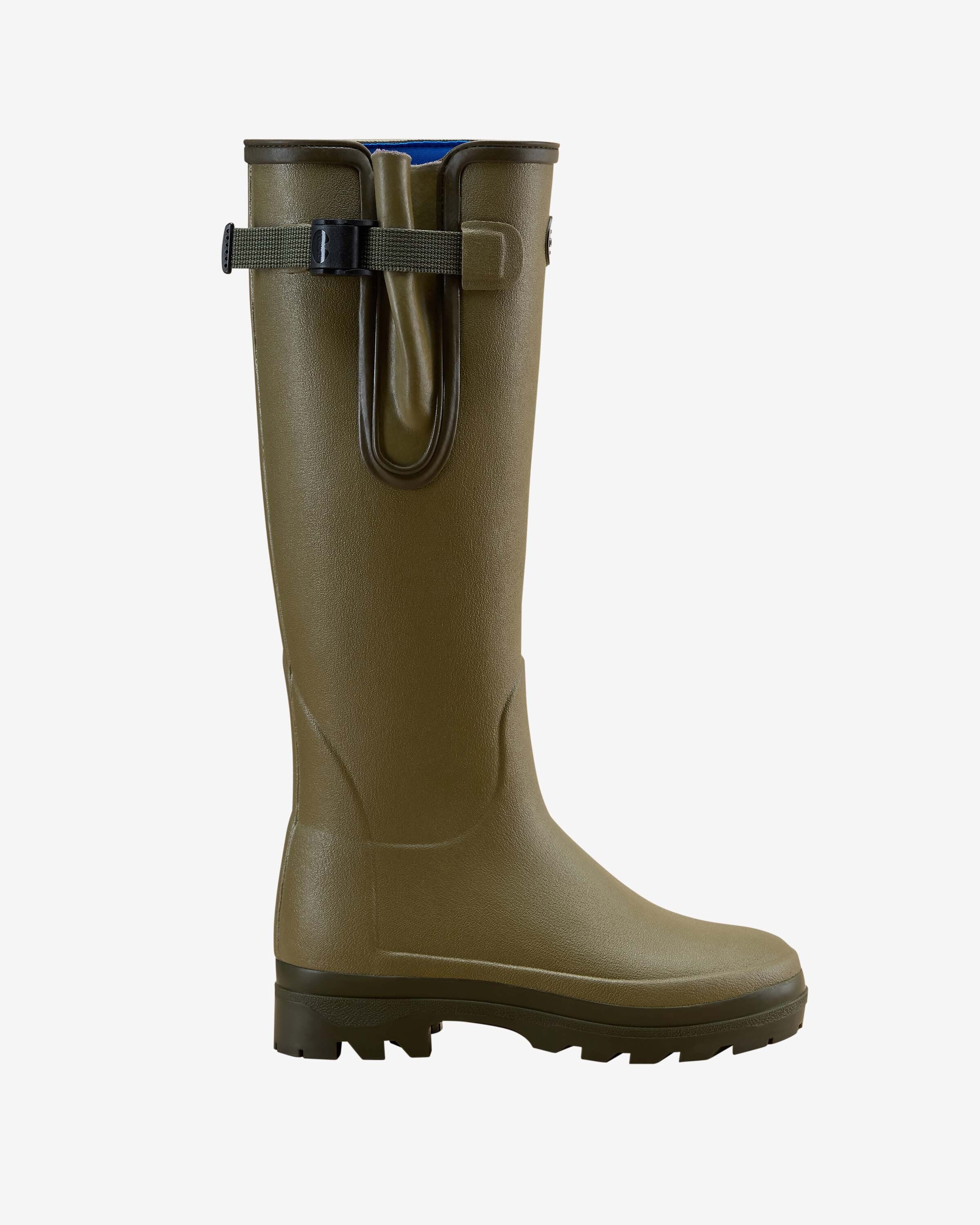
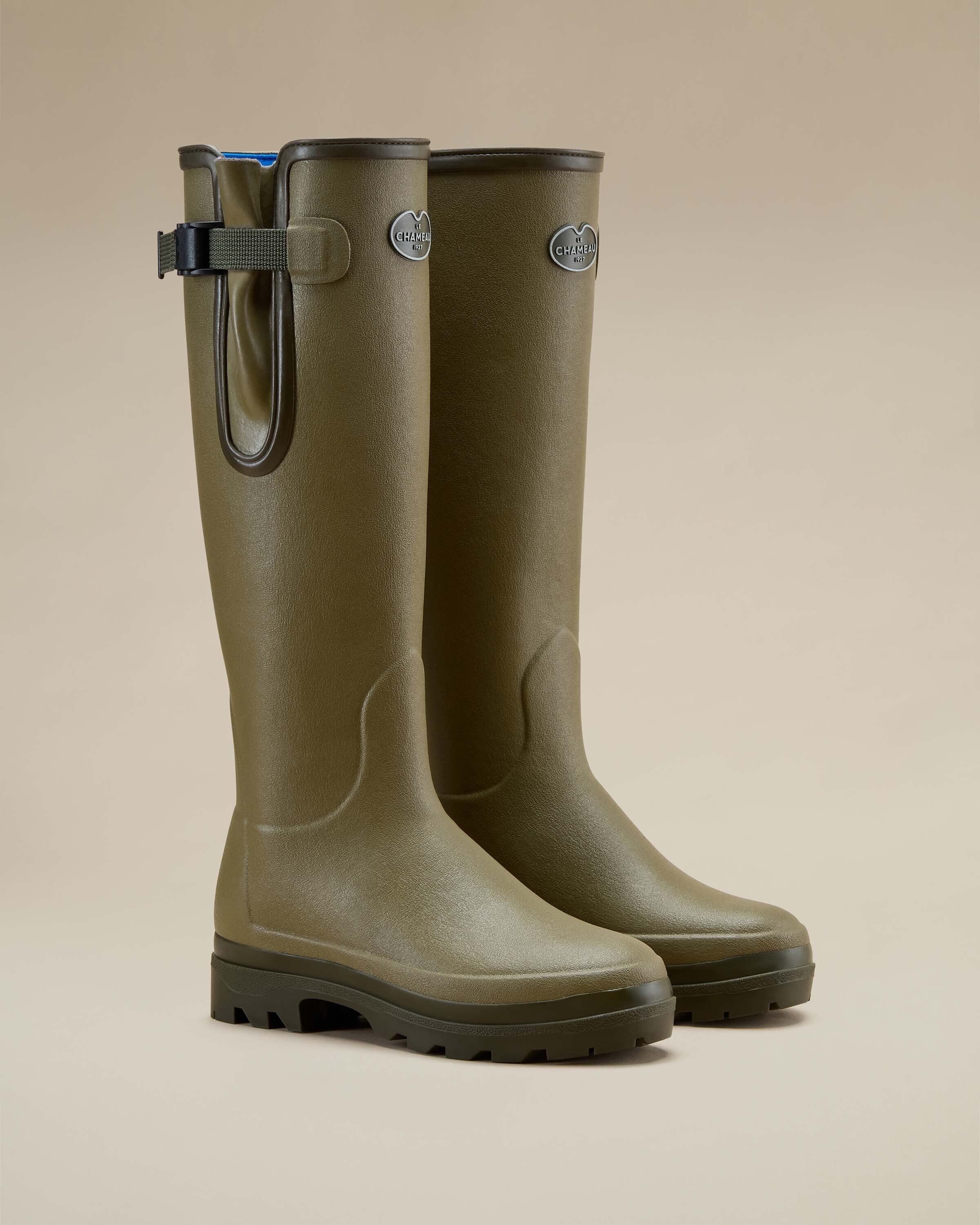
Tom McEwen wears Chasseur in Iconic Green and leather-lined at Gatcombe Park stables.
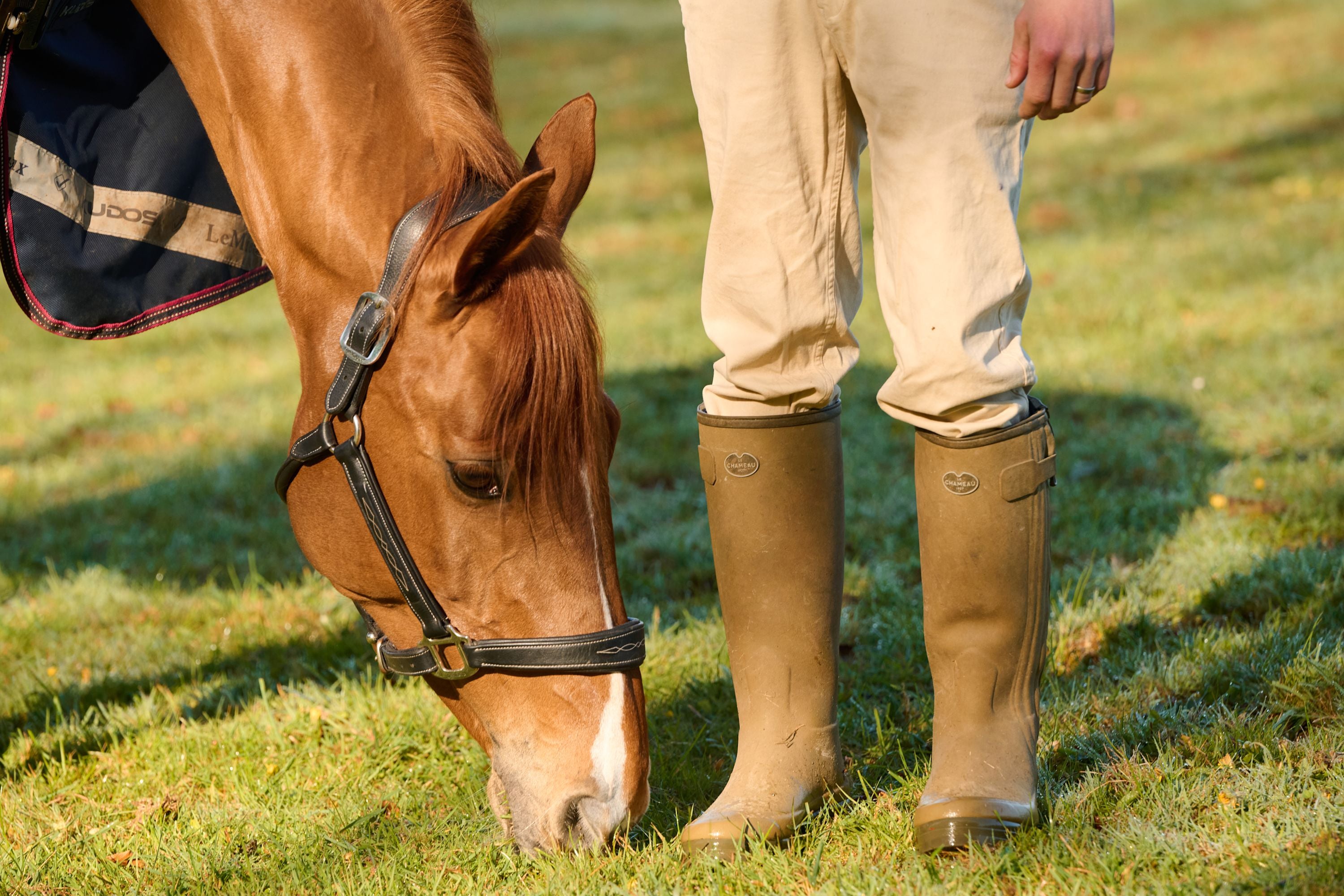
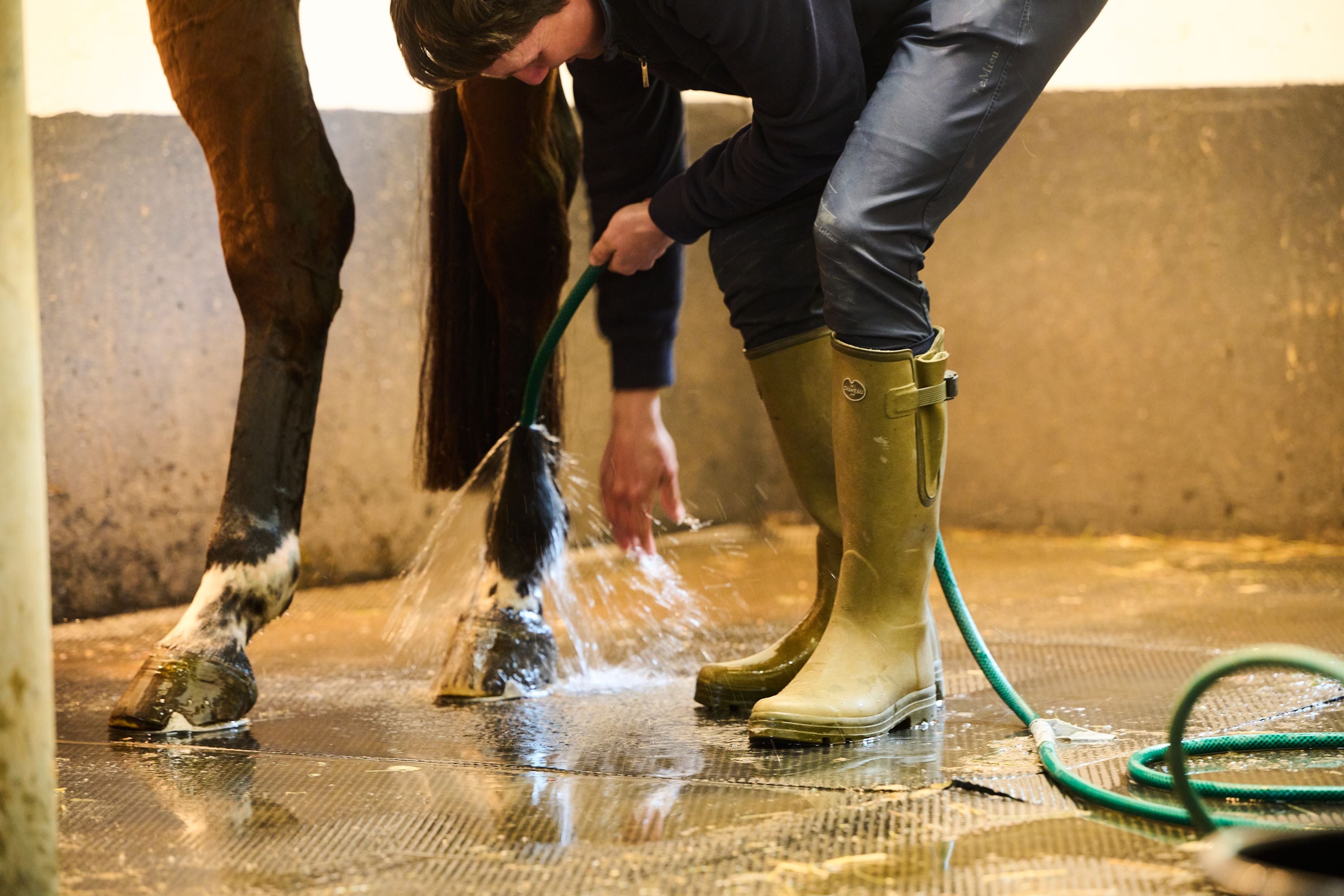
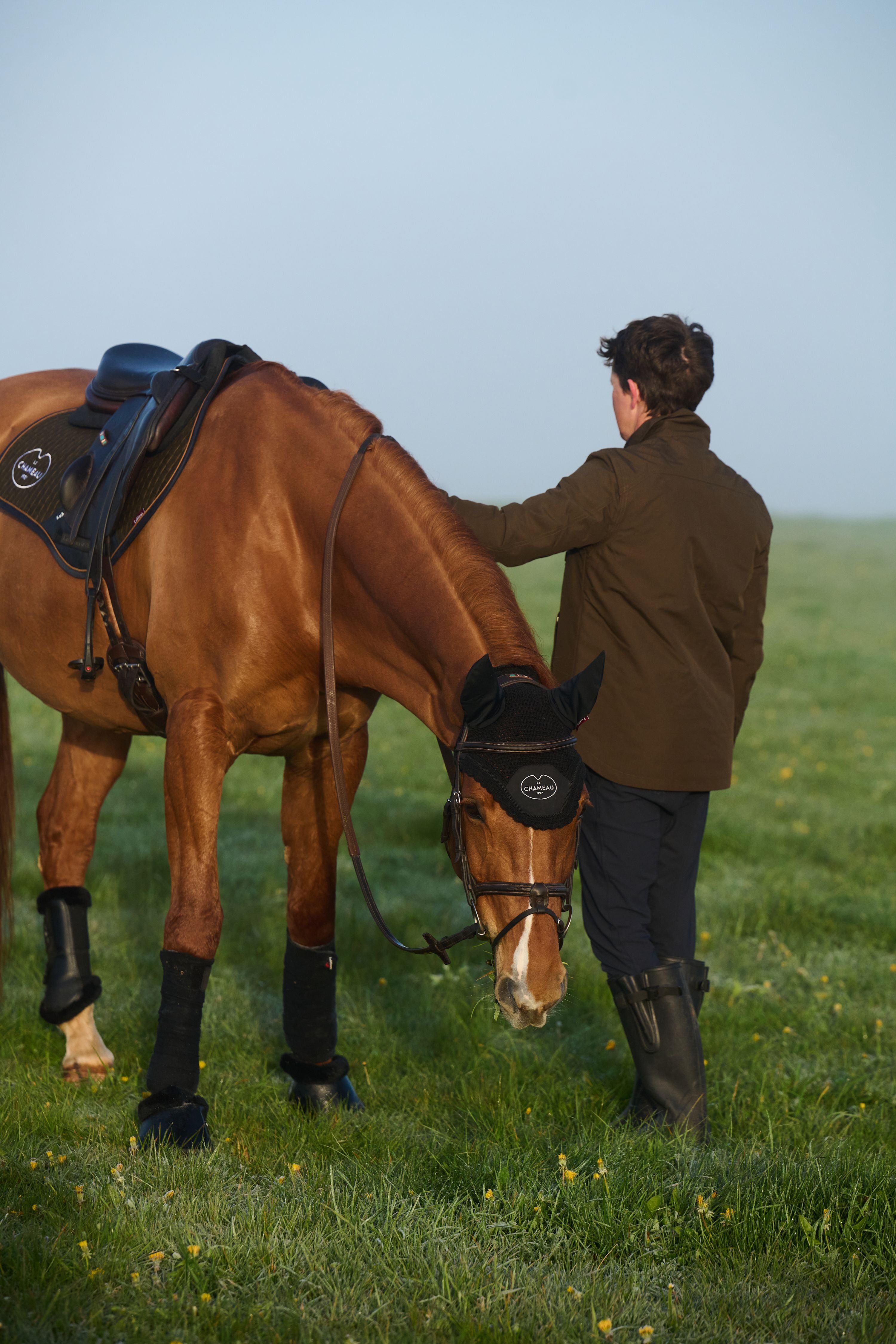
You talk about that bond between rider and horse – how is that built up over time, and can you describe that feeling when you get it right?
For me, the best way of showing a bond between horse and rider is describing it a little bit like Ronaldo or Messi playing football or Nadal or Federer playing tennis; the greats make things look easy, poetic.
If you go to one of our best sporting occasions like Badminton and you watch a rider and their horse go round fluently, very easy on the eye, almost like they are finding it too easy and you think the course should be harder, what you are seeing is an incredible bond between horse and rider. As you watch them, you can see none of the communication, the riders don’t have to tell the horse what’s coming next, it’s just understood; two beings acting as one.
Just think at competition, we're running around big obstacles, turning around blind corners and jumping over huge jumps at great speed, and that’s all testing the bond between you and your horse. And it’s a dialogue both ways, a conversation. When you're out on the course, what is the horse telling you? In cross country, moving around the course and jumping, my body moves this way and that, so the horse has to move with you. If you lean down, they start going a bit more forward or if you use a little outside rein they come up in their balance a little bit, they actually step and hold themselves because they're waiting to basically explode with a bit of power over a fence.
Of course, they've also got their own ideas about what their agenda is. They might be thinking they're going a different direction or jumping a different fence. So, yes, there is dialogue all the way around. Each horse has an individual personality and ability and it’s your job to understand each horse. Some horses love a big event with more spectators like JL Dublin as they feel part of the occasion, whilst other younger horses need a little more time getting used to crowds.
How do you perfect that bond between rider and horse?
The bond, the communication, the understanding between horse and rider is made from years of time together, to be honest. It's hours put into the school, put into our cross-country facilities, popping fences and on the road hacking. It's just time. The best way I can put this is I’ve got an amazing horse called JL Dublin. It was two years before the Olympics, and he was already a European champion with Nicola Wilson. It took me, even though he knew every single thing there was to know about eventing, it generally took us a year and a half for him to understand some of my buttons. As riders, we’ve all got slightly different buttons and a different way of going about things. It's probably not till now where I could say that he was ‘mine’, which is perhaps the wrong word, but he's actually at one with me. So, yes, it's one of those things that just formulates over time and performing in events, it's not a flick of a button or a turn of a switch.
Le Chameau recently did a course walk with Tom McEwen at Badminton Horse Trials this year. Follow us this summer for more equine events as we partner with Cowdray Park Polo Club in West Sussex.


 Préserver les Downs : la vie au domaine de CowdrayRead post
 Les adresses Le Chameau : le nord du NorfolkRead post
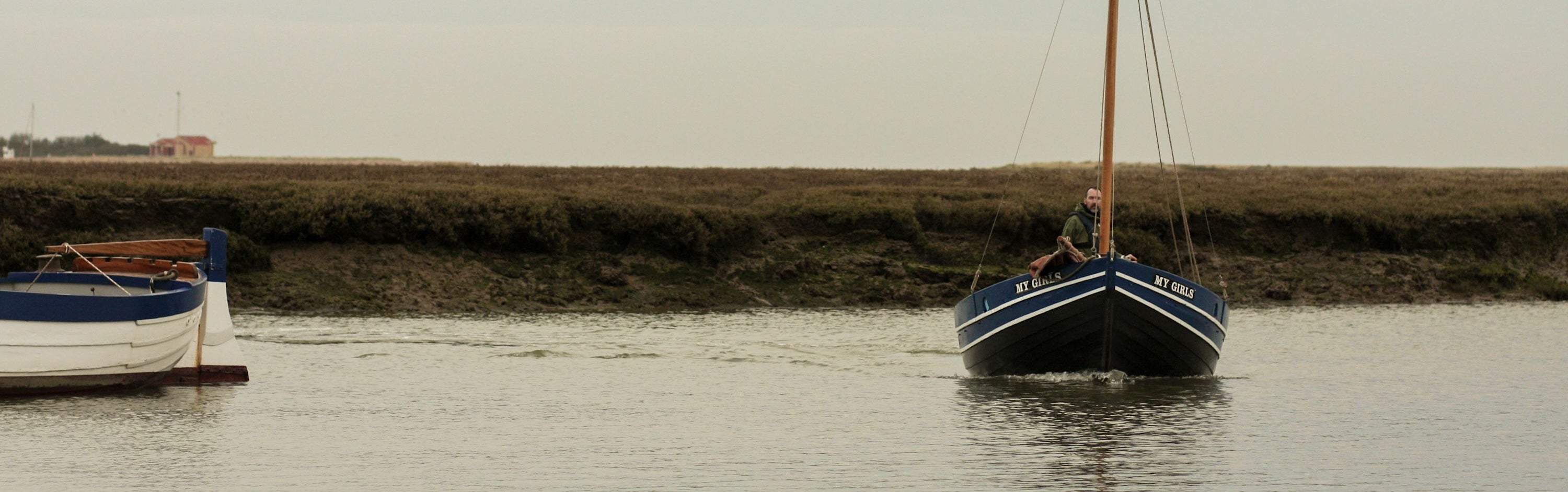 Prendre le large cet été : au rythme des maréesRead post
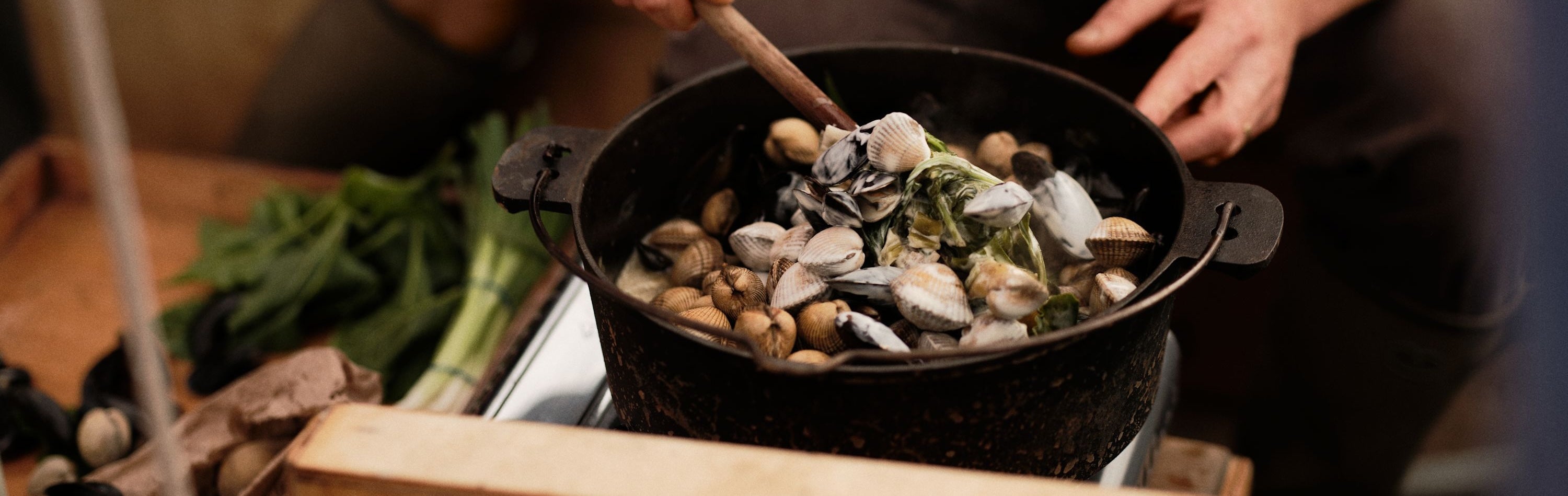 Les recettes d’été de Gill MellersRead post
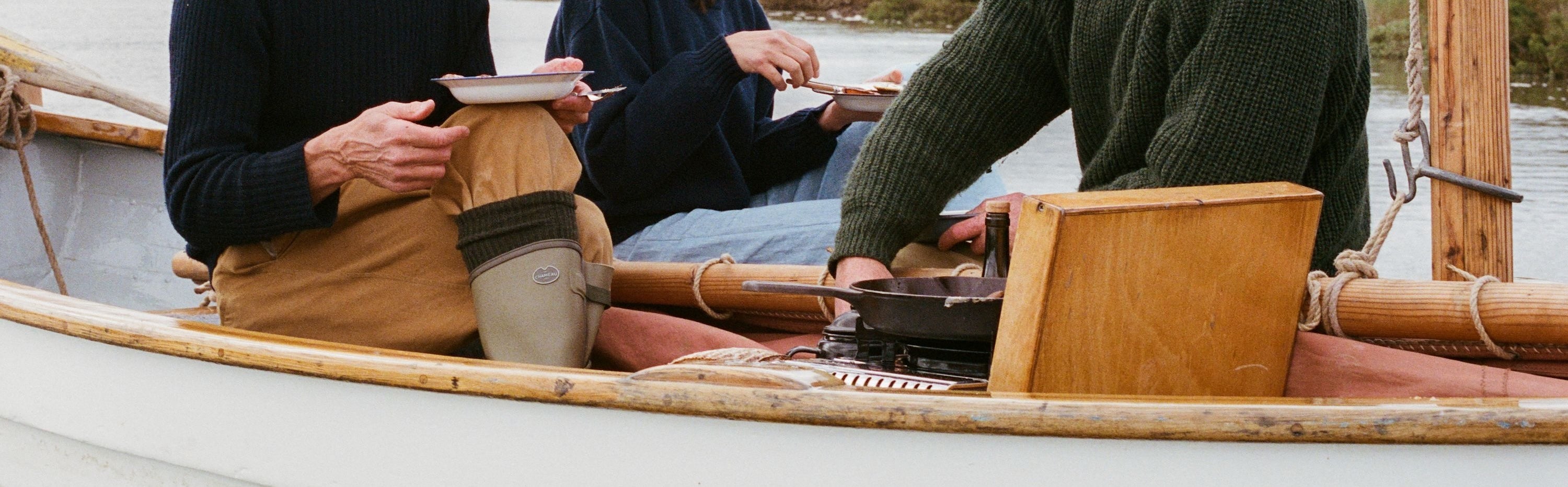 Cuisine en pleine nature avec Gill MellerRead post
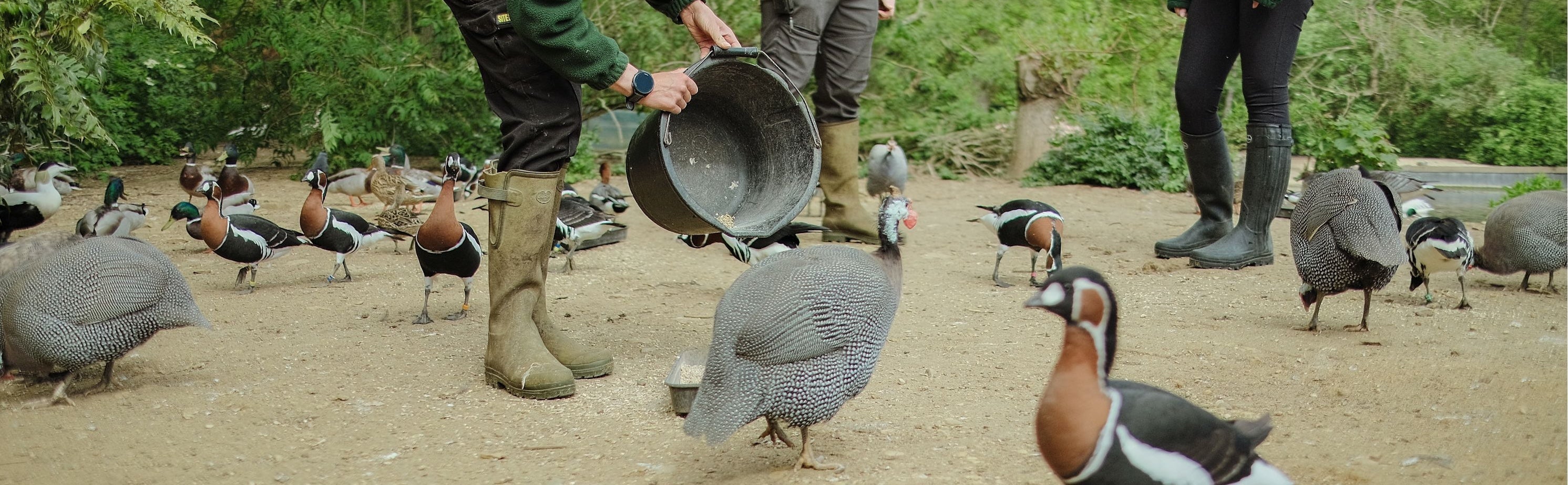 La préservation au cœur du Cotswold Wildlife Park & GardensRead post
 Guirec Soudée : entretien sur son tour du monde recordRead post
 Recette : À la découverte de The Kinneuchar InnRead post
